
You know when you see a sign or message, and people near you do not get it? The if those kids could read meme shows that feeling. You laugh because it makes fun of not knowing things. The meme shows you, in a funny way, that sometimes the joke is clear, but no one sees it. You can learn more about at what age do kids learn to read fluently.
Meme Origin And Context
This popular meme traces back to the classic animated show “King of the Hill.” A dryly humorous line evolved from a niche cartoon moment into a global internet staple—let’s explore its origin and spread.
King Of The Hill Reference
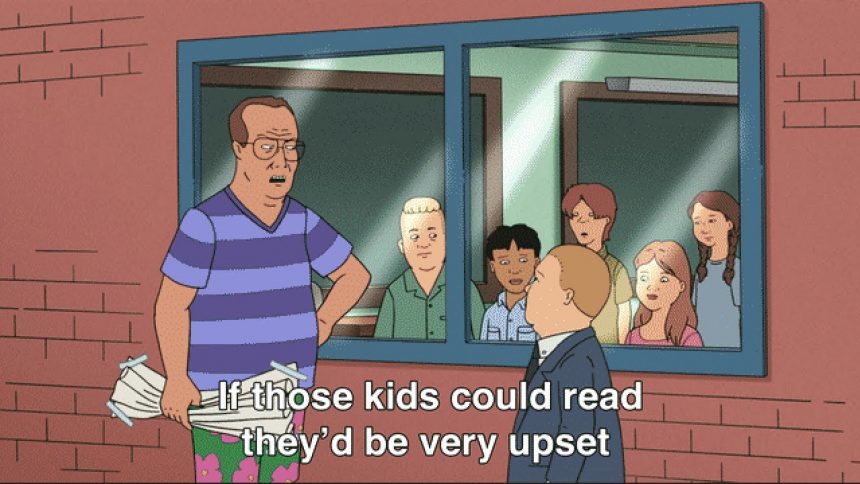
You might not expect a meme to come from a cartoon about Texas, but that is exactly what happened with the if those kids could read meme. The show “King of the Hill” gave us this gem. In the episode “Born Again on the Fourth of July,” which aired on April 14th, 2009, you see a group of kids standing near a sign with a mean message. The kids do not react at all. Why? They cannot read the sign. This moment sets up the perfect punchline.
“King of the Hill” often uses dry humor and everyday situations. This scene stands out because it takes something simple—kids not reading—and turns it into a joke about missing the point.
Here is what happens in that famous scene:
- Principal Moss sees the kids near the sign.
- The sign has a rude message, but the kids do not notice.
- Principal Moss says something that makes you laugh and think at the same time.
Principal Moss Quote
Principal Moss delivers the line that sparks the whole if those kids could read meme. He looks at the kids and says, “If those kids could read, they’d be very upset.” You can almost hear the sarcasm in his voice. He points out that the kids are clueless, not because they do not care, but because they simply cannot read the insult aimed at them.
This quote quickly became a favorite online. People love how it pokes fun at ignorance and misunderstanding. The internet grabbed onto this moment and ran with it. You see the meme pop up whenever someone misses an obvious joke or does not get a reference.
- The quote is funny and a little bit sharp. It makes you think about how often people miss the point.
- As social media grew, users started using the meme to call out situations where someone does not understand something right in front of them.
- The meme even shows up in political debates and online arguments. It works anywhere people want to highlight cluelessness or missed messages.
You can see why the if those kids could read meme took off. It is simple, clever, and works in so many situations. The original scene from “King of the Hill” gave the internet a perfect way to laugh at misunderstandings, both big and small.
Literal And Implied Meaning
The meme’s humor seems straightforward at first glance, but it holds multiple layers. Beyond a simple wordplay, its irony and sarcasm resonate deeply—we’ll break down its literal sense and hidden core.

Literal Interpretation
You see the scene. Principal Moss stands in front of a group of kids. The sign behind him has a rude message. The kids stare at it, totally clueless. Why? They cannot read the words. The joke hits you right away. The literal meaning is simple: if those kids could actually read, they would understand the insult and probably feel upset.
Here’s a quick breakdown to help you see the facts:
| Aspect | Details |
|---|---|
| Origin | The phrase comes from the animated series King of the Hill, in the episode “Born Again on the Fourth of July.” Principal Moss says, “If those kids could read, they’d be very upset.” |
| Context | The meme mocks the intelligence or awareness of the audience, much like other memes that poke fun at misunderstandings or cluelessness. |
| Spread | The first known exploitable image appeared on Facebook on May 7, 2020. It quickly gained popularity and spread across social media platforms. |
You can see why the literal meaning works so well. It’s a direct joke about not understanding something right in front of you. The humor comes from the obvious gap between what’s written and what the kids actually know.
Implied Message
Now, let’s dig a little deeper. The real magic of the if those kids could read meme comes from what it implies—not just what it says.
Irony And Sarcasm
You spot irony all over this meme. The person making the joke knows the message is clear, but the people it targets have no clue. That’s what makes it funny. You laugh because the situation flips your expectations. The meme uses sarcasm to point out how someone can miss something obvious.
Here are some classic examples of this kind of irony and sarcasm:
- A sign says, “Decaf – Not for Humans,” and people still try to drink it.
- Someone misreads a memo and returns files to the wrong place.
- An encouraging poster actually causes chaos because people misunderstand it.
You see these situations and think, “How did they miss that?” The meme captures that feeling perfectly.
Mocking Tone
The if those kids could read meme doesn’t just use irony. It also has a mocking tone. You can almost hear Principal Moss rolling his eyes. The meme pokes fun at people who miss the point, sometimes in a gentle way, sometimes not so gentle. You might use it when someone ignores a warning sign or fails to get a joke everyone else understands.
Tip: Next time you see someone miss an obvious clue, you can use this meme to add a little humor to the moment.
The meme’s power comes from this mix of sarcasm and mockery. You get to laugh at the situation, but you also see how easy it is to miss something right in front of your face.
Why The Meme Resonates
While many memes fade quickly, this one endures because it taps into universal feelings. Whether mocking others or laughing at ourselves, it perfectly captures “missing the point” moments—let’s uncover its relatable appeal.
Relatability
You scroll through your feed and spot the if those kids could read meme. Instantly, you recognize yourself or someone you know. Everyone misses the point sometimes. Maybe you walked past a sign and only realized its meaning hours later. Maybe your friend misunderstood a joke and laughed at the wrong part. This meme captures those moments perfectly.
You are not alone. People everywhere use humor to handle stress, especially during tough times like the pandemic. Memes like this one help you laugh at your own mistakes and feel better about them.
Here’s why you find it so relatable:
- You see your own confusion reflected in the meme.
- You remember times when you missed something obvious.
- You connect with others who share the same experience.
Memes also give you a way to express feelings that are hard to talk about. When you share a meme, you show others that you understand what they’re going through. You build a sense of community, even if you never meet face-to-face.
- Memes help you visualize your experiences.
- You feel understood when others react to your posts.
- You realize that everyone faces similar challenges.
Use Of Irony
Irony makes this meme shine. You expect the kids to react to the sign, but they don’t. The punchline flips your expectations. You laugh because the situation feels backward. The message is right there, but nobody gets it.
You use irony every day. Maybe you say, “Great weather!” when it’s pouring rain. The meme works the same way. It points out how people miss the obvious, and you find that funny.
- Irony adds a twist to simple situations.
- You enjoy seeing people miss the point in a harmless way.
- The meme lets you poke fun at misunderstandings without being mean.
Humor In Miscommunication
Miscommunication happens all the time. You text your friend, and they read it wrong. You hear instructions, but you mix them up. The if those kids could read meme turns these moments into comedy gold.
Laughter helps you deal with awkward situations. When you mess up, you can either feel embarrassed or find the humor in it.
This meme shows you that everyone gets confused sometimes. You don’t have to feel bad about it. Instead, you can laugh and move on. The meme makes light of mistakes and helps you see the funny side of life.
- You bond with others over shared misunderstandings.
- You learn to laugh at yourself.
- You realize that miscommunication is just part of being human.
Memes like this one remind you that nobody is perfect. Everyone misses the point now and then. The best thing you can do is laugh, share the joke, and keep going.
How The If Those Kids Could Read Meme Is Used
This meme is incredibly versatile, fitting social media comments, daily banter, and more. Its simple image-text format adapts to countless scenarios—we’ll look at its online usage and common variations.
Online Usage
You open your favorite social app and scroll. Suddenly, you spot the if those kids could read meme. Maybe it’s on Twitter, maybe it’s in a group chat, or maybe it’s hiding in a comment thread. This meme pops up everywhere people want to poke fun at someone missing the point. You see it in debates, in jokes about school, or even in sports arguments. The meme works because it’s simple and direct. You don’t need a lot of words. You just need a picture, a short caption, and the punchline.
“There has to be this identification immediately: when you see it you have to know what it means, and there are some very powerful pop culture references that you can draw on. And you have to do that if you want to speak the language.”
You might notice that meme creators keep things basic. They use a plain background, a funny image, and a few words. That’s all it takes. The meme lands its joke in seconds. You get it right away, and you laugh.
“That’s why the graphics are so bare: it’s just a white background, some text and a picture. And that’s actually the hard part for graphic designers because people always want to [make extra detail or graphics], but it’s just a joke and it should not look like a commercial.”
You can use the meme to tease your friends when they miss an obvious answer. You can also use it to comment on news stories or silly mistakes. The meme fits almost any situation where someone just doesn’t get it.
Common Variations
The meme’s flexibility has spawned numerous popular iterations. From reusable templates to creative social media twists, these variations keep it fresh—let’s dive into the most widely used versions.
Social Media Examples
You see the if those kids could read meme everywhere. On Instagram, someone might use it to roast a friend who missed a birthday party invite. On TikTok, you might watch a video where someone holds up a sign, and the joke is that nobody in the background notices. Twitter users love to use the meme to comment on confusing news headlines or wild celebrity tweets.
“We had to try to communicate in this language that young people understood. But it was also important to us, because we are a public service, that it had an element of journalism in it; that it wasn’t just entertainment. It had to be journalistic stories that we wanted to communicate, just via memes or graphics.”
You can even spot the meme in serious places. News accounts use it to highlight when people ignore important facts. Teachers share it to joke about students missing homework instructions. The meme adapts to every situation, and you can make it your own.
You don’t need fancy tools or special skills. You just need a good idea and a sense of humor. The if those kids could read meme lets you join the fun and share your own take on missing the obvious.
Impact On Internet Culture
Memes are more than jokes—they shape online communication. This meme standardized mocking “missing the point” and influenced digital humor—let’s examine its impact on internet culture.
Communication Styles
You probably notice how memes change the way you talk online. The if those kids could read meme gives you a shortcut for calling out missed messages or clueless moments. You do not need a long explanation. You just drop the meme, and everyone gets the joke. Memes like this one shape your conversations in group chats, comment sections, and even in gaming lobbies.
- Memes help you feel like you belong in a group.
- You use them to show you understand the vibe.
- They make your chats more fun and less formal.
You see how memes boost engagement. When you share a meme, you invite others to join in. The more you use them, the more you feel like part of the community. Context matters, too. Some memes work best with your close friends, while others fit big public groups.
Memes are like secret handshakes for the internet. You use them to say, “Hey, I get it. I’m one of you.”
Spread Of Inside Jokes
Inside jokes used to stay between friends. Now, memes let you spread those jokes to the whole world. The if those kids could read meme started as a line from a cartoon, but now you see it everywhere. You use it to poke fun at people who miss the obvious, and soon, everyone else does, too.
- You turn a simple moment into a running joke.
- Friends and strangers both join in.
- The joke grows and changes as more people use it.
You might see someone use the meme in a way you never thought of. That’s the magic of internet culture. One small joke can become a huge trend. You help shape the joke every time you share or remix it.
Role In Digital Humor
Digital humor moves fast. You want to make people laugh, and memes give you the tools. The if those kids could read meme works because it’s quick, clever, and easy to understand. You do not need to explain the punchline. The picture and words do all the work.
- Memes let you laugh at mistakes without being mean.
- You use them to lighten the mood when things get tense.
- They help you connect with people who share your sense of humor.
You see memes everywhere—on social media, in texts, even in school projects. They shape the way you joke, tease, and react online. The next time you spot a meme, remember: you are part of a giant, ever-changing comedy club.
Interpreting The Meme
As its usage expands, the meme’s meaning evolves. From a simple cartoon reference to a cross-cultural expression—we’ll explore how its interpretation shifts and adapts across cultures.
Changing Meaning
You might think a meme always means the same thing. That is not true. The meaning of a meme can shift as people use it in new ways. The if those kids could read meme started as a joke about missing the point. Now, you see it in all sorts of situations. Sometimes, people use it to poke fun at friends who do not get a joke. Other times, you see it in serious debates when someone ignores important facts.
Memes are like chameleons. They change color to fit the mood of the internet.
You can spot this meme in places you never expected. Maybe someone uses it to talk about sports fans who ignore the scoreboard. Maybe a teacher uses it to laugh about students missing homework instructions. The meaning bends and stretches to fit whatever story you want to tell.
Here is a quick look at how the meaning can change:
| Situation | Meme Meaning |
|---|---|
| School | Missing instructions |
| Sports | Ignoring the obvious score |
| Online debates | Not seeing the main argument |
| Friend groups | Missing inside jokes |
You hold the power to shape what the meme means. Every time you share it, you give it a new twist.
Cultural Adaptations
You live in a world full of different cultures. Memes travel fast, and they pick up new flavors along the way. The if those kids could read meme started in America, but now you see it everywhere. People in other countries change the words or the picture to fit their own jokes.
- In Japan, you might see anime characters in the meme.
- In Brazil, the meme could use soccer players instead of cartoon kids.
- In France, someone might swap the sign for a famous French landmark.
You can even find the meme in different languages. Sometimes, the joke changes a little to match local humor. Other times, the meme stays the same, but the meaning feels fresh because of the new setting.
Tip: Try searching for this meme in another language. You might find a version that makes you laugh even harder!
You help the meme grow every time you remix it. You add your own culture, your own jokes, and your own style. That is how a simple cartoon line becomes a global inside joke.
You now know why the if those kids could read meme makes you laugh and think. This meme started with a cartoon but grew into a worldwide joke. It shapes how you talk and joke online. Here’s what makes memes like this so powerful:
- You boost your reading skills by decoding jokes and references.
- You find reading fun when humor rewards you.
- You mix pictures and words to master modern communication.
Next time you share a meme, remember—you help shape internet culture!
FAQ
Can I make my own version of this meme?
Absolutely! You grab a template, add your own twist, and share it. You can use your own photos or favorite jokes. The meme world loves creativity.
Why do people love using this meme?
You love it because it’s simple, relatable, and always gets a laugh. Everyone misses the point sometimes. This meme lets you laugh about it with friends.
Is the meme ever used in serious situations?
Yes! You sometimes see it in debates or news posts. People use it to highlight when someone ignores important facts. The meme works for both jokes and serious moments.
Are there other memes like this one?
You bet! Memes like “DW Can’t Read” or “Don’t Make Me Tap the Sign” have a similar vibe. You use them to call out missed messages or clueless moments.
Can this meme be misunderstood?
Sometimes! If you use it with the wrong crowd, people might not get the joke. You should always know your audience before sharing.