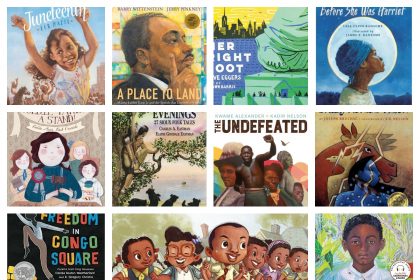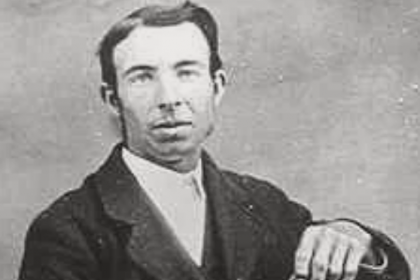


Historical fiction opens a powerful window into the past for young readers. By blending real historical settings with compelling characters and engaging stories, historical fiction helps children understand history not as a list of dates, but as lived human experiences.
In this guide, we explore 15 favorite historical fiction books for kids that are available free online for educational reading. These carefully selected children’s books for different age groups highlight diverse historical periods and encourage empathy, curiosity, and critical thinking.
Whether you are a parent, teacher, or homeschooling family, this list will help you find meaningful and accessible historical fiction books for children.
Why Historical Fiction Is Important for Kids
Historical fiction plays a vital role in children’s literacy and intellectual development. It connects the past to the present while strengthening both emotional understanding and academic skills.
How Historical Fiction Helps Children Understand History
Many children struggle to engage with history when it is presented only through textbooks. Historical fiction changes that by placing young readers inside historical moments. Instead of memorizing facts, children experience history through relatable characters.
When children read historical fiction, they:
- Learn about real events, social systems, and cultural traditions
- Understand how historical decisions affected ordinary people
- Develop empathy for individuals who lived in different times
Stories about slavery, immigration, war, economic hardship, and social change help children grasp the complexity of history. They begin to see that history is shaped by human choices, struggles, and resilience.
Reading Skills and Critical Thinking Benefits
Historical fiction also strengthens essential reading and thinking skills. As children follow narratives set in unfamiliar eras, they must actively interpret context, language, and motivations.
Key benefits include:
- Improved vocabulary through historical terms and expressions
- Stronger reading comprehension and inference skills
- Increased ability to compare past and present societies
- Development of moral reasoning and ethical awareness
By questioning characters’ actions and historical circumstances, children learn to think critically rather than passively consume information.
How We Selected These Free Historical Fiction Books
Choosing the right historical fiction books for kids requires careful evaluation. We focused on quality, accuracy, accessibility, and age suitability.
Age-Appropriate and Child-Friendly Content
All books included are suitable for elementary and middle school readers. The stories present complex historical themes in a way children can understand without being overwhelmed.
Each book:
- Uses clear, age-appropriate language
- Centers on child protagonists or relatable perspectives
- Handles serious topics with sensitivity and care
Historically Accurate Yet Engaging Stories
We selected books that are grounded in real historical events, eras, or cultural backgrounds. While fictionalized, these stories remain faithful to historical realities.
The books:
- Reflect authentic social conditions and historical settings
- Avoid oversimplifying or distorting history
- Balance accuracy with engaging storytelling
Free Online Access for Kids and Families
Accessibility matters. All titles on this list are legally available for free online reading through libraries, educational platforms, or digital reading services.
Some of these books can also be found on Epic, the leading digital reading platform for kids. Epic offers access to over 40,000 high-quality children’s books from 250+ publishers and is designed to support reading confidence for children aged 12 and under.
Best Historical Fiction Books for Kids
Historical fiction has a remarkable ability to transport young readers to different eras, enabling them to explore the past through engaging narratives. These stories not only entertain but also educate, fostering empathy and understanding of diverse experiences. Below is a selection of impactful historical fiction books for children, complete with an overview of their themes and significance.
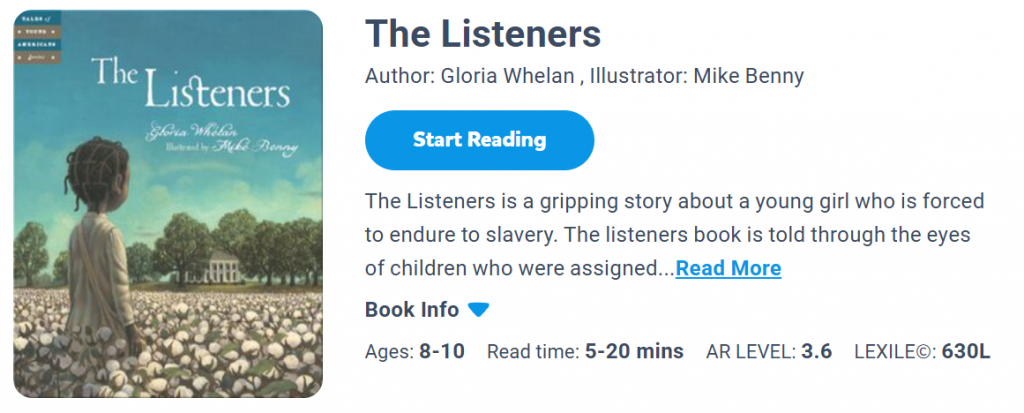
1. The Listeners
Author: Gloria Whelan
Theme: Set in the context of slavery, “The Listeners” follows a young girl who must endure the painful realities of life on a plantation. The story is told through the eyes of children tasked with listening to the conversations of plantation owners after a grueling day of labor. Key moments in the book, such as the narrator overhearing the plantation owner discussing her father’s sale, highlight the emotional and familial turmoil experienced by enslaved families.
Significance: This book provides a powerful lens through which young readers can understand the emotional complexities and harsh realities of slavery. It portrays enslaved individuals as resilient figures rather than mere victims, encouraging children to acknowledge the strength it takes to maintain hope and dignity amidst adversity. “The Listeners” serves as an important educational tool, helping kids grasp the severe implications of slavery while fostering compassion toward those who suffered.
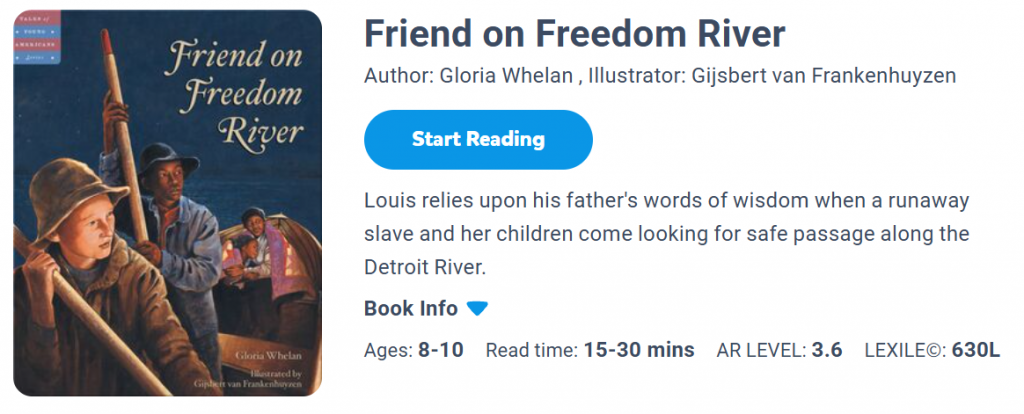
2. Friend on Freedom River
Author: Gloria Whelan
Theme: The story revolves around Louis, who relies on his father’s wisdom when a runaway slave and her children seek safe passage along the Detroit River. As they navigate the challenges posed by societal norms and personal fears, Louis learns vital lessons on bravery and kindness.
Significance: This narrative imparts significant moral lessons about courage and compassion. Through Louis’s journey, readers are encouraged to reflect on the importance of standing up for what is right, ultimately highlighting the power of human connection and empathy during times of injustice.
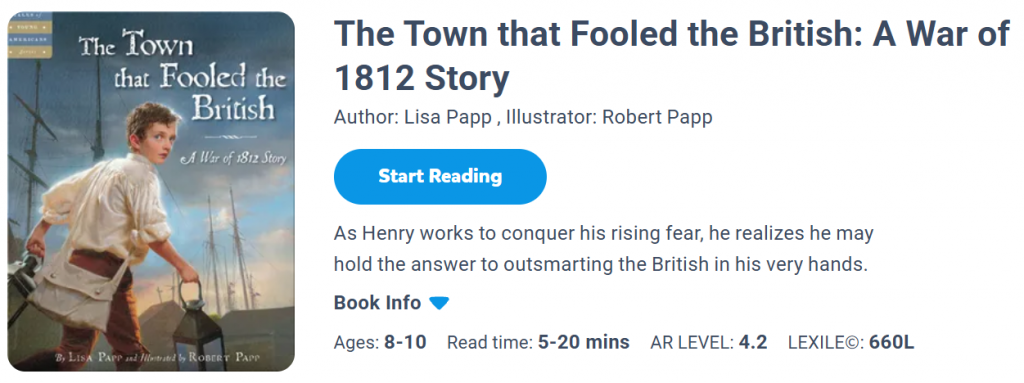
3. The Town that Fooled the British: A War of 1812 Story
Author: Lisa Papp
Theme: The story focuses on Henry, a young boy grappling with fears of the British during the War of 1812. As he confronts his anxieties, Henry discovers that he may have the solution to outsmarting the enemy.
Significance: This tale not only entertains with its adventurous plot but also inspires readers to embrace ingenuity and resourcefulness in the face of fear. It encourages children to recognize their own potential to impact historical events, emphasizing that courage often comes from unexpected places.
4. The Lucky Star
Author: Judy Young
Theme: Set against the backdrop of the Great Depression, this book tells the story of a family finding ways to maintain hope and positivity despite the era’s hardships. The protagonist reflects on the simple joys that persist even in difficult times.
Significance: “The Lucky Star” illuminates themes of resilience and gratitude, teaching children about the strength of family bonds. It also encourages young readers to appreciate the small blessings in their lives, fostering a positive outlook when faced with challenges.

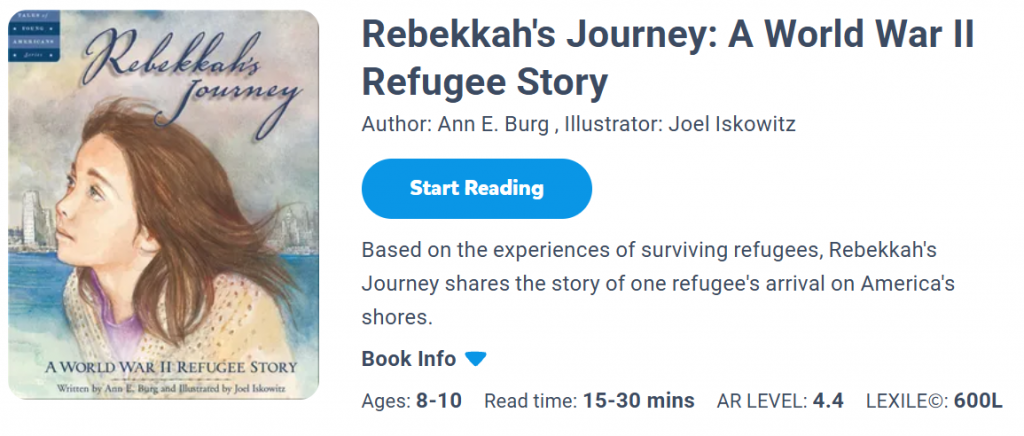
5. Rebekkah’s Journey: A World War II Refugee Story
Author: Ann E. Burg
Theme: Based on real events, “Rebekkah’s Journey” tells the story of a young refugee arriving in America during World War II, exploring her experiences and struggles.
Significance: The book provides crucial insights into the refugee experience, fostering empathy and understanding. By illustrating the challenges of starting anew, it encourages young readers to appreciate the struggles and strengths of those who seek a better life.
Free Historical Fiction Books by Age Group
Different age groups benefit from tailored stories that resonate with their developmental stages and comprehension levels. Here’s a selection of age-appropriate historical fiction books designed to engage and educate young readers.
Historical Fiction Books for Kids Ages 5–7
Children in this age group thrive on simple yet profound stories that introduce them to the broader world.
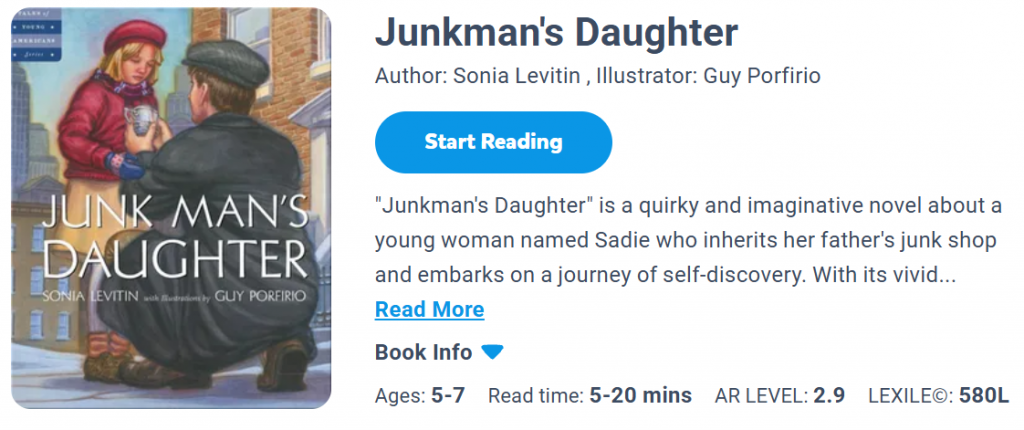
1. Junkman’s Daughter
Author: Sonia Levitin
Theme: “Junkman’s Daughter” tells the whimsical story of Sadie, who inherits her father’s eclectic junk shop. As she embarks on a journey of self-discovery, Sadie learns about her family and community through the quirky items in the shop.
Significance: This novel celebrates family ties and the beauty of unexpected treasures. It empowers young readers to view their surroundings through a lens of curiosity and wonder, encouraging them to explore their identities.
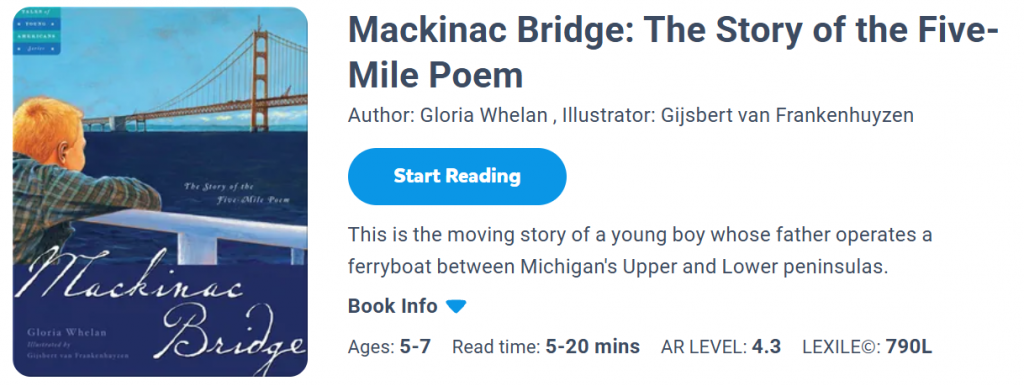
2. Mackinac Bridge: The Story of the Five-Mile Poem
Author: Gloria Whelan
Theme: This touching tale follows a young boy whose father operates a ferry service between Michigan’s peninsulas, highlighting the bond between them against the backdrop of the Great Lakes.
Significance: The book illustrates themes of familial love and resilience while providing insights into regional history. It allows children to connect with the past through relatable family dynamics and the significance of community.
Historical Fiction Books for Kids Ages 8–10
Books for this age group delve into narratives with slightly more complex themes and characters, encouraging critical thinking about social issues.
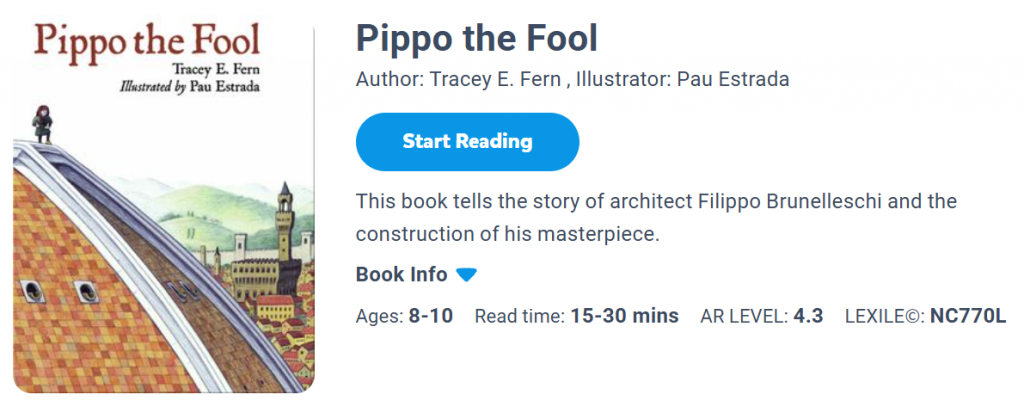
1. Pippo the Fool
Author: Tracey E. Fern
Theme: This narrative recounts the life of Filippo Brunelleschi, a visionary architect, and the creation of his remarkable dome for the Florence Cathedral.
Significance: “Pippo the Fool” inspires creativity and innovation, showing how determination can lead to monumental achievements. It encourages young readers to appreciate the arts and history, linking their aspirations to historical figures.
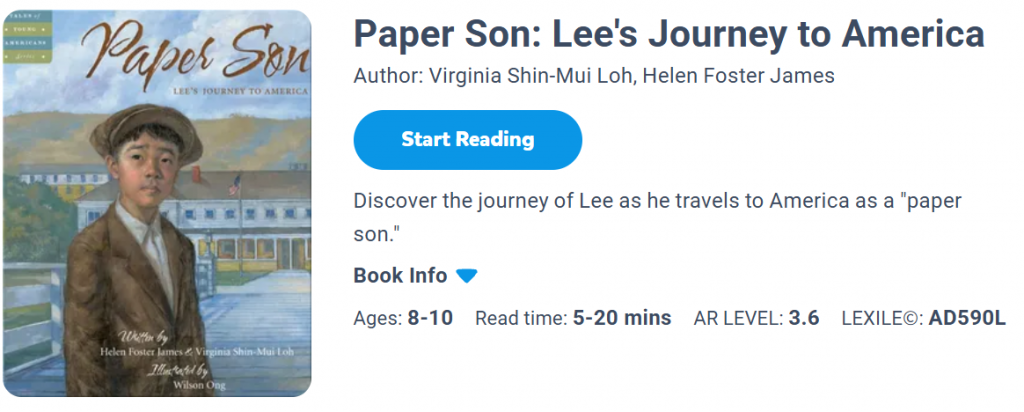
2. Paper Son: Lee’s Journey to America
Authors: Virginia Shin-Mui Loh, Helen Foster James
Theme: This story follows Lee’s perilous journey to America, where he must navigate the complexities of being a “paper son,” a term for Chinese immigrants who entered the U.S. under false identities.
Significance: The book explores themes of identity, immigration, and the quest for belonging. It educates children about the immigrant experience, fostering compassion and understanding for those tackling similar challenges today.
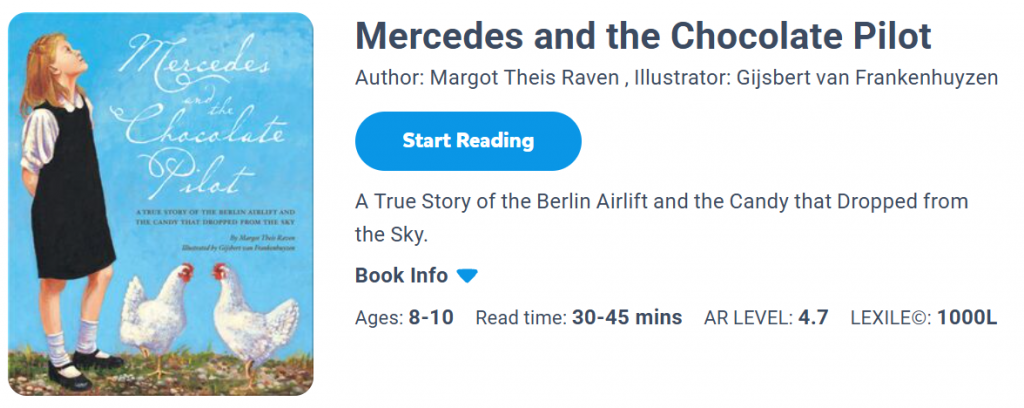
3. Mercedes and the Chocolate Pilot
Author: Margot Theis Raven
Theme: Based on true events, this heartwarming story illustrates the Berlin Airlift, where American pilots dropped candy from planes to children in Berlin.
Significance: The narrative highlights the themes of kindness and hope during tough times, reminding readers of the power of generosity. It also introduces important historical events in an engaging manner.
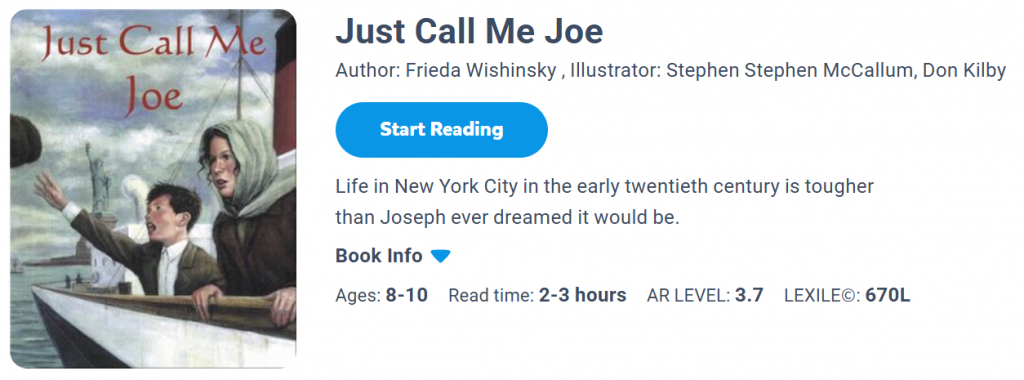
4. Just Call Me Joe
Author: Frieda Wishinsky
Theme: This story paints a picture of life for a young boy named Joseph who faces the harsh realities of New York City in the early twentieth century.
Significance: It serves as a window into the immigrant experience, discussing socioeconomic challenges and the resilience required to navigate them. It helps children appreciate their own privileges while understanding historical hardships.
5. Discovering Emily
Author: Jacqueline Pearce
Theme: The narrative centers on Emily Carr, a budding artist, as she struggles to develop her talent in a conservative environment, exploring her passions amid familial expectations.
Significance: This book encourages creativity and self-expression, illustrating how personal struggles can lead to artistic development. It inspires young readers to pursue their interests despite societal constraints.

Historical Fiction Books for Kids Ages 11–12
Older children can engage with narratives that tackle more profound emotional and social themes, enhancing their understanding of historical contexts.
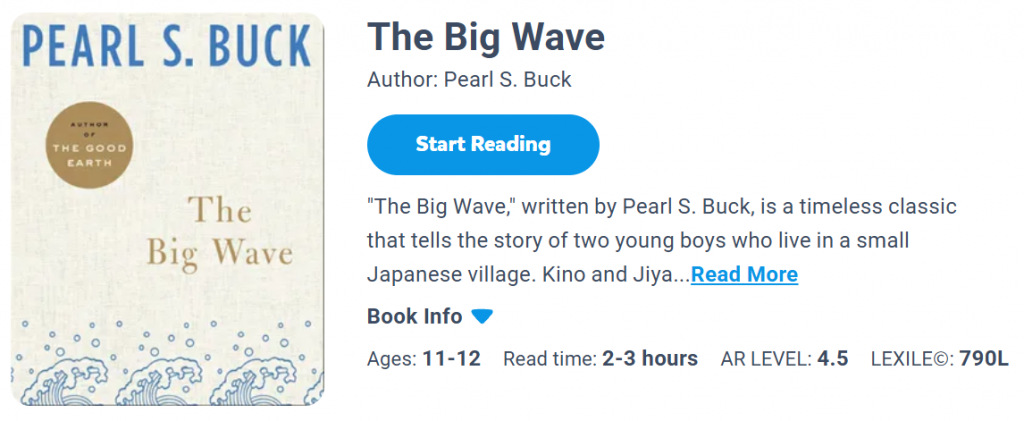
1. The Big Wave
Author: Pearl S. Buck
Theme: In this classic tale, two boys, Kino and Jiya, live in a peaceful Japanese village until a tsunami drastically alters their lives, leaving them to navigate loss and rebuilding.
Significance: The book explores deep themes of friendship, courage, and resilience in adversity. It challenges readers to confront difficult questions about life, loss, and hope, promoting emotional growth and maturity.
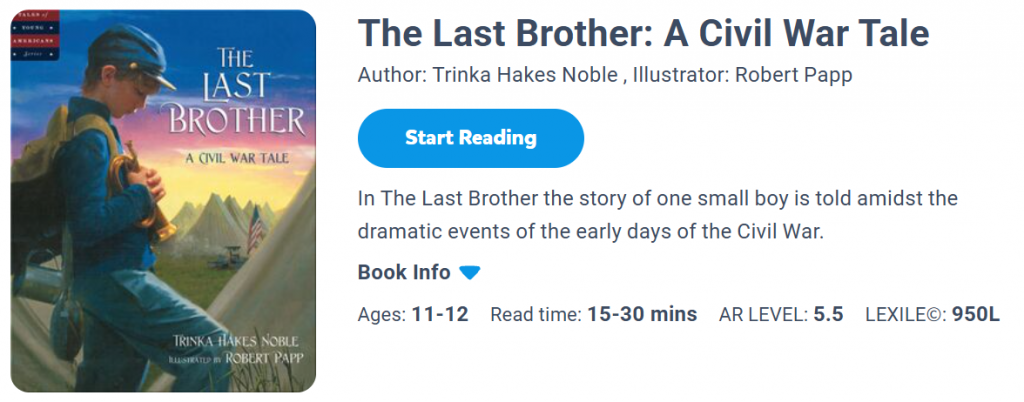
2. The Last Brother: A Civil War Tale
Author: Trinka Hakes Noble
Theme: Set during the early days of the Civil War, the story follows a young boy who grapples with the chaos surrounding him and the impact of war on his family.
Significance: This narrative provides a child’s perspective on the effects of war, emphasizing the innocence lost during such tumultuous times. It encourages discussions about history’s impact on personal lives and the importance of remembering the past.
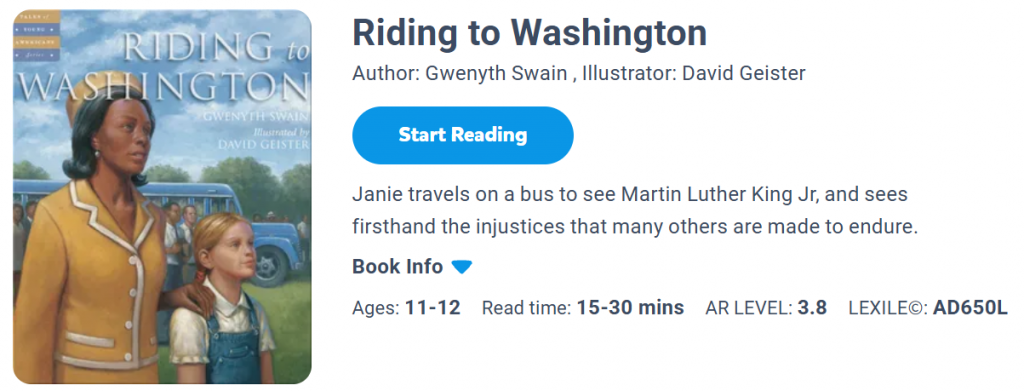
3. Riding to Washington
Author: Gwenyth Swain
Theme: Janie’s journey to witness Martin Luther King Jr. in Washington emphasizes the civil rights movement and the injustices faced by many.
Significance: This book educates young readers about significant historical events and social issues, inspiring them to engage with their communities and advocate for justice. It encourages them to think critically about equality and activism.
Through these carefully selected historical fiction books, young readers are equipped with knowledge, empathy, and inspiration. They gain insights into the past while recognizing the connections to their lives today, ultimately fostering a more profound appreciation for human experiences across time.
Popular Authors of Historical Fiction for Kids
Certain authors consistently excel at writing meaningful historical fiction for children.
Sonia Levitin
Known for exploring identity, immigration, and family history, Levitin’s books are emotionally rich and accessible.
Gloria Whelan
Whelan’s work spans American history, focusing on moral courage, community, and social change.
Trinka Hakes Noble
Noble specializes in emotionally sensitive historical narratives, especially related to war and national conflict.
Historical Fiction vs. Realistic Fiction
While both historical fiction and realistic fiction center around believable narratives, they diverge significantly in their settings, themes, and purposes.
Historical Fiction
Definition and Characteristics:
Historical fiction is a genre that takes place in a specific historical context, often during a significant period or event. This genre invites readers to step into the shoes of individuals living in a different time, offering a unique lens through which history can be seen.
Setting in the Past: The hallmark of historical fiction is its grounding in a particular era. Whether it’s the Revolutionary War, the Great Depression, or the Civil Rights Movement, these stories transport readers to times long gone.
Educational Value: One of the key strengths of historical fiction is its ability to teach history through narrative. By embedding historical facts within engaging storylines, authors can spark interest and curiosity about the past. Readers often come away with a deeper understanding of historical events, cultural contexts, and societal norms of the time.
Research Requirement: Crafting a compelling historical narrative requires diligent research. Authors must ensure that their settings, characters, and events are authentically represented. This attention to detail not only strengthens the narrative but also honors the realities faced by those who lived through those times.
Examples: Notable works in this genre include “The Book Thief” by Markus Zusak, set during World War II, and “Chains” by Laurie Halse Anderson, which explores the American Revolution. Both stories bring history to life in rich and compelling ways, allowing readers to engage emotionally with the past.
Realistic Fiction
Definition and Characteristics:
On the other hand, realistic fiction focuses on contemporary life, bringing to light the everyday experiences and challenges faced by individuals today.
Set in Modern Times: This genre is characterized by its contemporary settings. Stories often unfold in familiar environments, such as schools, neighborhoods, or urban settings, making them relatable to readers.
Focus on Everyday Issues: Realistic fiction delves into personal and social issues—friendship, family dynamics, bullying, mental health, and identity. By addressing these themes, authors shine a spotlight on the complexities of modern life, allowing readers to see themselves reflected in the characters’ experiences.
Reflection of Current Social Norms: This genre also serves as a mirror to society, often critiquing or highlighting cultural trends, social issues, and moral dilemmas. Through realistic narratives, readers can gain insights into the values, challenges, and diversities of contemporary life.
Examples: Prominent examples include “Wonder” by R.J. Palacio, which addresses themes of kindness and acceptance, and “The Hate U Give” by Angie Thomas, which engages with issues of race and justice in today’s society.
Both historical fiction and realistic fiction hold immense value in literature. Historical fiction has a unique ability to connect readers, especially children, to the past, fostering empathy and understanding of historical events and their impacts. In contrast, realistic fiction resonates with readers through its exploration of the present, encouraging reflection on personal and societal issues.
By engaging with both genres, readers can enjoy a richer literary experience, gaining wisdom from the lessons of history while navigating the challenges of contemporary life. Together, they cultivate a deeper appreciation for the complexities of human experience across time.
Conclusion
Historical fiction books for kids offer far more than simple entertainment. They help children build empathy by allowing them to experience history through the eyes of relatable characters, while also strengthening reading comprehension, vocabulary, and critical thinking skills. By presenting historical events in story form, these books make complex topics more accessible and memorable, deepening children’s understanding of the past.
When parents and educators choose age-appropriate, historically accurate, and freely accessible titles—especially through trusted digital reading platforms such as Epic, which provides a wide range of high-quality children’s books—they can inspire curiosity and confidence in young readers. Easy access to engaging content encourages regular reading habits and a lasting interest in learning.
The books on this list represent diverse voices, cultures, and time periods from around the world. Together, they help children see history not as distant facts, but as rich, complex, and deeply human stories that continue to shape the world today.
FAQs
Where can I find a list of the best historical stories for kids?
You can explore curated lists on educational blogs, school and public library websites, and child-focused digital reading platforms such as Epic. As a leading digital reading platform for kids, Epic offers access to a collection of over 40,000 high-quality books from more than 250 top publishers worldwide. Many platforms like this organize historical stories by age group, reading level, and historical period, and some also provide free online access, making it easier for parents and educators to find safe, engaging, and educational content for children.
Historical fiction vs. fantasy: which is better for children?
Both genres offer unique benefits, and neither is strictly better than the other. Historical fiction helps children understand real historical events, cultures, and social issues through relatable characters and storytelling. It builds empathy and connects young readers to the past. Fantasy, on the other hand, encourages imagination, creativity, and abstract thinking. A balanced reading mix of both genres supports well-rounded cognitive and emotional development.
Are historical fiction books educational for kids to read?
Yes. Historical fiction combines storytelling with factual context, helping children develop reading comprehension, critical thinking, and historical awareness. These books introduce important themes such as resilience, fairness, and cultural diversity while making history more engaging and easier to understand. As a result, children often learn more effectively than they would through textbooks alone.