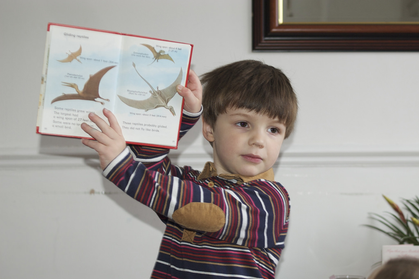

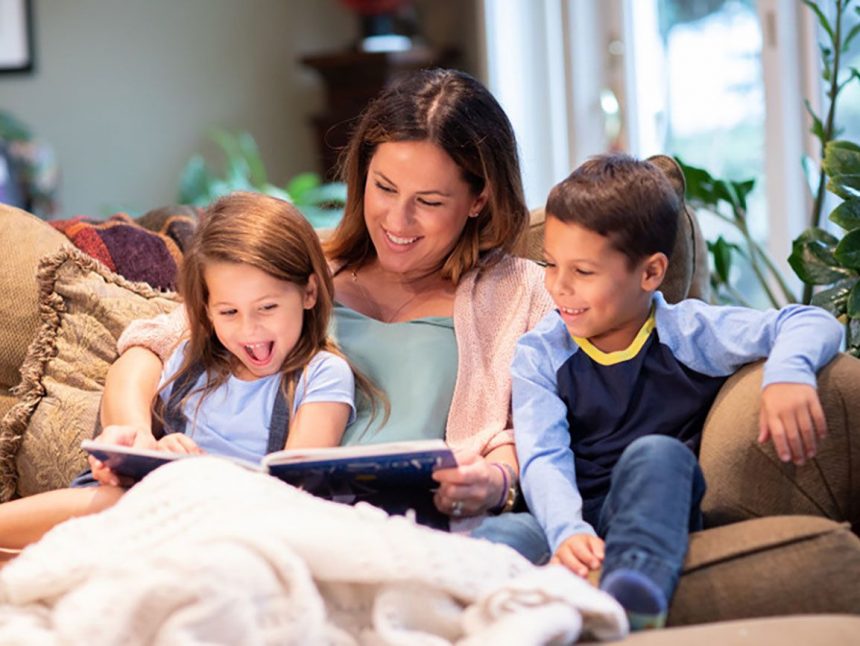
Every parent wonders at some point: Is my child where they should be with reading? It’s one of the most common questions in early childhood — and one of the most important. Reading development follows a general progression, and understanding the key reading milestones by age can help you celebrate your child’s progress, spot early warning signs, and know exactly how to support them at each stage.
In this guide, we’ll walk through what to expect from birth through age 12, along with practical tips for supporting literacy at home.
Why Reading Milestones Matter
Reading milestones are not about putting pressure on children or comparing them to their peers. Instead, they give parents and educators a shared framework for understanding healthy literacy development. When you understand reading milestones by age, you can provide the right books, activities, and support — without pushing too hard or holding back.
However, it’s also important to remember that children develop at different rates. A child who is slightly behind in one area may be ahead in another. However, if you notice your child consistently missing multiple milestones in the same stage, it’s worth speaking with their teacher or pediatrician.
👉 Related reading: Understanding Reading Levels for Kids
Ages 0–1: Birth to 12 Months
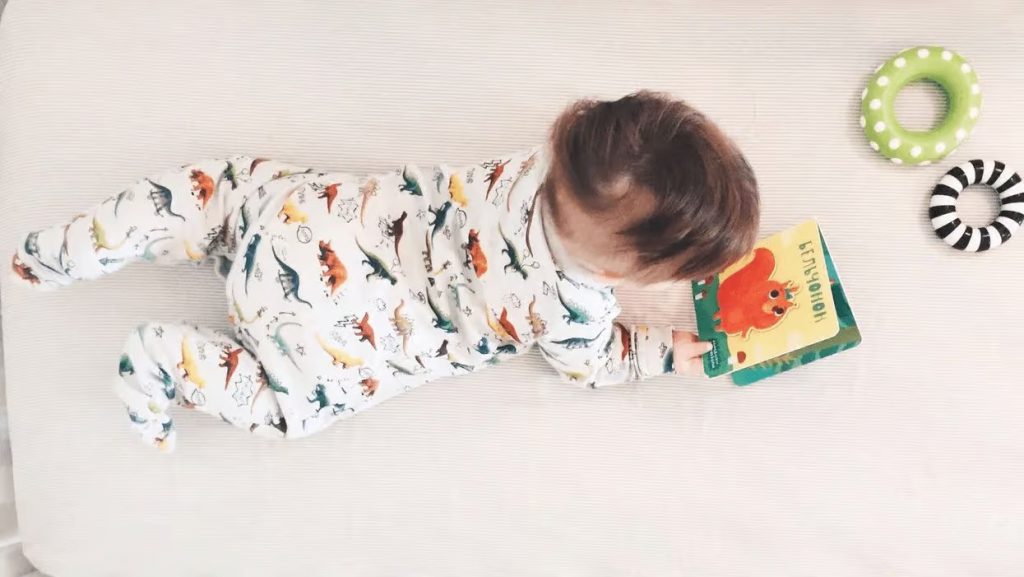
Literacy begins long before a child ever holds a book. From birth, babies are absorbing language through every sound, word, and story they hear. During this stage, the foundation for reading is built through listening and bonding.
Key milestones at this stage:
- Responds to the sound of familiar voices
- Shows interest in faces and high-contrast images in board books
- Begins to babble and imitate sounds by 6–9 months
- Enjoys being read to and listening to rhymes and songs
What parents can do: Read aloud daily, sing nursery rhymes, and talk to your baby throughout the day. The more language they hear, the stronger their language foundation becomes.
Ages 1–2: Toddler Stage
As children enter the toddler years, their vocabulary begins to grow rapidly. They start connecting words to objects and people, which is a critical early literacy skill.
Key milestones at this stage:
- Says first words around 12 months
- Points to pictures in books when named
- Turns pages in board books (often several at once)
- Begins using 2-word phrases by age 2 (e.g., “more milk,” “daddy go”)
- Shows preference for favorite books and asks for them repeatedly
What parents can do: Choose sturdy board books with simple, bright pictures. Label objects in books out loud and encourage your toddler to point and repeat after you.
Ages 2–3: Language Explosion

Between ages 2 and 3, most children experience a gigantic leap in language. Vocabulary grows from around 50 words at age 2 to as many as 1,000 words by age 3. This period is sometimes called the “language explosion” — and it’s a critical window for literacy development.
Key milestones at this stage:
- Uses sentences of 3–4 words
- Retells simple stories from familiar books
- Recognizes that print carries meaning (understands books have words, not just pictures)
- Enjoys rhyming words and repeating phrases
- Begins to notice environmental print (logos, signs, labels)
What parents can do: Read books with repetition and rhyme, like Dr. Seuss titles. Ask simple questions during reading: “What’s that?” and “What do you think happens next?”
Ages 3–4: Preschool Reading Readiness
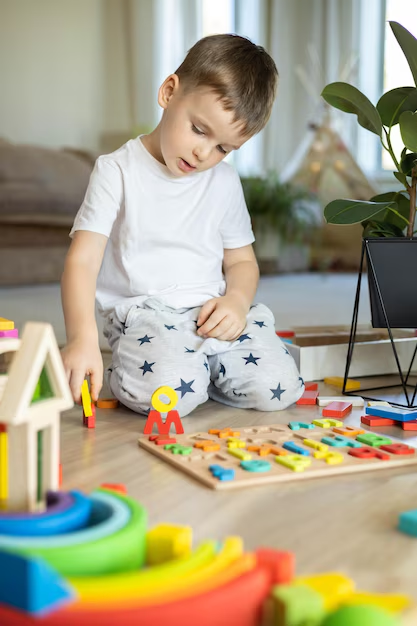
At this stage, children begin developing the specific pre-reading skills that will prepare them for formal reading instruction. This period is therefore often called “reading readiness” — and it’s one of the most important windows in a child’s literacy journey.
Key milestones at this stage:
- Recognizes and names most letters of the alphabet
- Understands that words are made of individual sounds (phonological awareness)
- Knows how to hold a book correctly and follows print left to right
- Recognizes their own name in print
- Begins to identify rhyming words
- Understands basic story structure (beginning, middle, end)
What parents can do: Practice the alphabet through songs, games, and magnetic letters. Read books that play with rhyme and sound, and point to words as you read them aloud.
Ages 4–5: Early Phonics and Print Awareness
This is when many children begin connecting letters to sounds — the foundation of phonics. Some children start reading simple words at this stage, while others are still building the groundwork. Both are completely normal.
Key milestones at this stage:
- Knows most letter sounds (phonics awareness)
- Begins to blend simple 3-letter words (CVC words like “cat,” “dog,” “sit”)
- Recognizes common sight words like “the,” “I,” “a,” “is”
- Can write their own name and some letters
- Retells stories with more detail and accuracy
- Understands that sentences are made of individual words
What parents can do: Use free phonics tools like Starfall or Khan Academy Kids to practice letter sounds. Play simple word games like “I Spy something that starts with the letter B.”
Ages 5–6: Kindergarten Reading
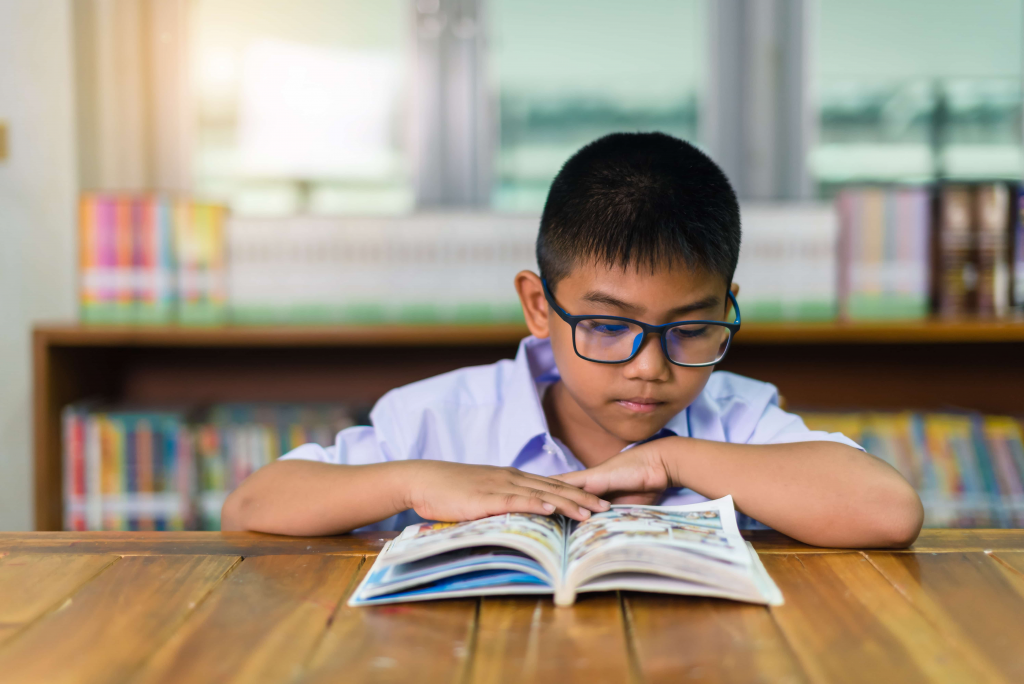
Kindergarten is typically when formal reading instruction begins. By the end of kindergarten, most children are reading simple books independently — though the pace of progress varies widely and that’s completely normal.
Key milestones at this stage:
- Reads simple decodable books and early readers independently
- Recognizes 25–100 sight words by sight
- Decodes short vowel words consistently
- Begins to self-correct when reading errors don’t make sense
- Understands that punctuation affects how we read aloud
- Can retell a story including key characters and events
What parents can do: Read alongside your child every day. Let them lead — point to words, sound out new ones together, and praise effort over accuracy. Visit your local library and let your child pick their own books.
Ages 6–7: First Grade Fluency
First grade is a major turning point. Most children make significant leaps in reading fluency during this year — moving from slow, labored decoding to reading with more speed and expression. This is also when comprehension skills start to develop more deeply.
Key milestones at this stage:
- Reads simple books with increasing fluency and expression
- Decodes longer words using phonics patterns (blends, digraphs, long vowels)
- Recognizes 100–200 sight words automatically
- Reads for meaning — pauses when something doesn’t make sense
- Can summarize what they read in their own words
- Begins reading chapter books with short chapters
What parents can do: Encourage your child to read aloud to you daily. Listen without correcting every error — focus on meaning first. Introduce early chapter book series like Elephant and Piggie, Fly Guy, or Mercy Watson.
Ages 7–9: Independent Reading
By second and third grade, most children transition from “learning to read” to “reading to learn.” This is a significant shift. As a result, children who read independently at this stage begin building knowledge, vocabulary, and comprehension skills that support every other subject in school.
Key milestones at this stage:
- Reads chapter books independently with good comprehension
- Reads silently for sustained periods (15–30 minutes)
- Uses context clues to figure out unfamiliar words
- Identifies main idea, supporting details, and story themes
- Reads both fiction and non-fiction with understanding
- Begins to form and express opinions about what they read
What parents can do: Build a home reading routine with dedicated quiet reading time. Talk about books at the dinner table. Let your child see you reading — it models that reading is something adults value, not just a school task.

Ages 9–12: Reading to Learn
In the upper elementary years, reading becomes a tool for learning across all subjects. Children encounter more complex texts, longer books, and a wider range of genres and text types. Vocabulary and comprehension become increasingly important at this stage.
Key milestones at this stage:
- Reads chapter books, novels, and non-fiction texts with strong comprehension
- Adjusts reading pace and strategy based on the type of text
- Makes inferences and draws conclusions from what they read
- Understands figurative language, metaphor, and tone
- Reads independently for extended periods and chooses books voluntarily
- Uses reading to research and gather information
What parents can do: Encourage reading across genres — adventure, mystery, biography, science, history. Discuss books together. A child who talks about what they read builds deeper comprehension than one who reads in isolation.
When to Seek Help
Some variation in reading development is completely normal. However, there are certain signs that may indicate a child needs additional support. Consider speaking with your child’s teacher or pediatrician if your child:
- Is not saying any words by 15 months
- Cannot recognize any letters by age 4
- Is struggling significantly with letter-sound connections by the end of kindergarten
- Is reading well below grade level by the end of first grade
- Avoids reading, becomes frustrated easily, or complains that words “jump around” on the page
- Has difficulty rhyming or hearing individual sounds in words
Early intervention makes a significant difference. Conditions like dyslexia are most effectively supported when identified early, and many reading difficulties are highly treatable with the right approach.
👉 Related reading: Reading Rockets — Resources for struggling readers
Tips for Supporting Reading at Every Age
Regardless of your child’s age or stage, these habits consistently support reading development:
- Read aloud together every day. Even after children can read independently, being read to builds vocabulary and comprehension in ways that independent reading alone cannot.
- Let children choose their own books. Interest-driven reading is more effective than assigned reading for building lifelong literacy habits.
- Make books visible and accessible. Keep books in common areas of your home. Children read more when books are easy to reach.
- Use free digital tools to supplement practice. Apps like Epic!, Duolingo ABC, and Storyline Online can reinforce skills between reading sessions.
- Talk about what your child reads. Ask open-ended questions: “What was your favorite part?” or “Why do you think the character did that?”
- Be patient and positive. Children who associate reading with stress or pressure develop negative attitudes toward books. Make reading a warm, low-stakes part of daily life.
👉 Related reading: Phonics and Early Reading at Home
Reading Milestones at a Glance
| Age | Stage | Key Skills |
|---|---|---|
| 0–1 | Pre-literacy | Responds to voice, enjoys being read to |
| 1–2 | Toddler | First words, points to pictures, turns pages |
| 2–3 | Language explosion | 3–4 word sentences, retells simple stories |
| 3–4 | Reading readiness | Alphabet recognition, rhyming, print awareness |
| 4–5 | Early phonics | Letter sounds, simple word blending, sight words |
| 5–6 | Kindergarten reading | Simple books, 25–100 sight words, decoding |
| 6–7 | Fluency building | Reads with expression, chapter books beginning |
| 7–9 | Independent reading | Sustained silent reading, comprehension skills |
| 9–12 | Reading to learn | Complex texts, inference, research reading |
Final Thoughts
Understanding reading milestones by age gives parents a powerful tool — not to compare or pressure, but to support. Every child’s reading journey is unique, and the most important thing you can do is stay involved, stay patient, and keep books at the center of your family’s daily life.
Tracking reading milestones by age is one of the best ways to stay connected to your child’s literacy journey. Whether your child is just discovering board books or diving into chapter novels, your engagement as a parent makes a bigger difference than any app, program, or curriculum ever could.
FAQ: Reading Milestones by Age
What are normal reading milestones by age?
Normal reading milestones vary by age. Babies respond to voice and enjoy being read to. Toddlers point to pictures and say first words. Preschoolers learn letter sounds and rhyming. Kindergartners begin reading simple books. By second grade, most children read independently. See the full breakdown above for each stage.
When should a child start reading on their own?
Most children begin reading simple books independently between ages 5 and 6, typically during kindergarten. However, some children start earlier and some start later — both are completely normal. What matters most is the direction of progress, not the exact timing.
What if my child is behind on reading milestones?
If your child is consistently missing multiple milestones for their age group, speak with their teacher or pediatrician. Early support is much more effective than waiting. Many reading difficulties, including dyslexia, respond very well to targeted intervention when identified early.
How can I support reading milestones at home?
Read aloud together every day, let your child choose their own books, keep books accessible around your home, and use free digital tools to supplement practice. Most importantly, make reading a positive, pressure-free part of your daily routine.
Do reading milestones differ for boys and girls?
Research shows that girls, on average, tend to develop language skills slightly earlier than boys — but the difference is small and individual variation is far greater than any gender-based pattern. All children benefit from the same supportive reading environment regardless of gender.