

Learning how to help kids with reading assignments can be tricky for parents. A child may understand the story but have trouble figuring out what a question is asking. Another child may stare at a worksheet and say, “I don’t know,” even though they just finished reading the book.
When this happens, it can be tempting to jump in, explain everything, point out the answer, or even write down what your child should say. After all, everyone has homework to finish!
But there is an important difference between helping kids with reading assignments and doing the assignment for them. The goal is to give children enough support to move forward while still allowing them to do the reading, thinking, and writing themselves.
Here are some practical ways to help kids with reading assignments without taking over the work.
Why Kids Need Help With Reading Assignments
A reading assignment may look simple to an adult, but children are often working on several skills at once. They may need to understand the text, remember important details, figure out what a question means, organize their thoughts, and then explain their answer in writing.
Sometimes the problem is not the reading itself. A child might understand what happened in a story but struggle to identify the main idea, explain a character’s actions, find evidence in the text, or write a complete response.
Other assignments may simply have confusing directions. If a child does not understand what the assignment is asking them to do, they may need help getting started before they can work independently.
How to Help Kids With Reading Assignments: Start With the Directions
Before helping with an answer, ask your child to explain what they are supposed to do. This small step can make a surprisingly big difference.
You might ask:
- “What is the question asking you to find?”
- “What are you supposed to write?”
- “Does it say how many sentences you need?”
- “Are you supposed to use information from the book?”
If your child cannot explain the directions, go back and read them together. You can help clarify unfamiliar words or break a long set of directions into smaller steps.
That is different from telling your child what the answer should be. You are helping them understand the task so they can complete it themselves.
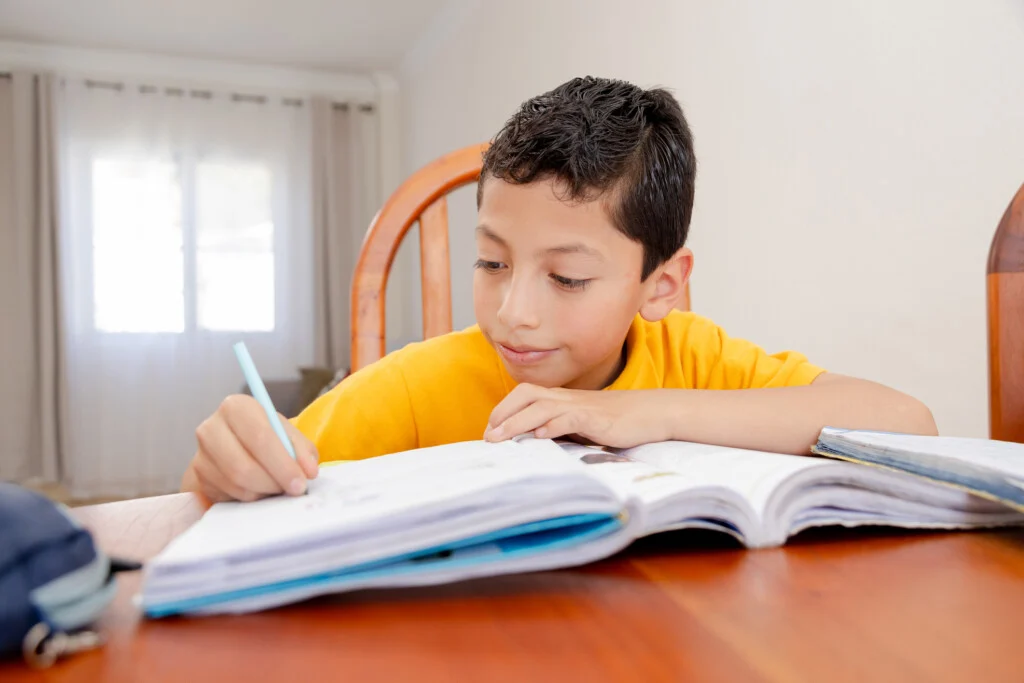
Help Kids With Reading Assignments by Asking Questions Instead of Giving Answers
One of the easiest ways to help kids with reading assignments is to respond to “I don’t know” with a question of your own.
If a worksheet asks about the setting and your child says they don’t know, instead of saying, “It takes place in Egypt,” you might ask, “Where does the story take place?”
If they still cannot remember, try asking where they could look to find the answer. They might realize that they can go back to the book and look for clues.
The same approach works for many types of reading questions. You can guide your child toward the information without giving them the answer outright.
Teach Kids to Go Back to the Book
Children sometimes assume that they are supposed to remember everything they read. They may feel stuck if they cannot immediately remember a character’s name, an important event, or a specific detail.
Remind them that good readers go back to the text all the time.
Digital reading platforms can also give children more opportunities to practice these skills. Epic, for example, gives kids access to a large library of digital books that they can explore while building reading habits and practicing comprehension.
If a question asks why a character made a particular choice, the child does not necessarily have to remember the answer from memory. They can look through the relevant part of the story for clues.
You can ask, “Where in the book might you find that information?”

With practice, children begin to understand that the book itself is a resource they can use while completing an assignment. This is also a useful habit when children are working on reading comprehension questions.
Finding Evidence in the Text to Help Kids With Reading Assignments
Many reading assignments ask children to support their answers with information from the book. This can be especially difficult for younger readers.
Instead of searching for the answer yourself, ask your child to find the part of the text that supports their thinking.
For example, if your child says, “The character is scared,” you might ask, “What happened that makes you think the character is scared?”
This encourages the child to connect their answer to something they actually read.
For older children, this can become a useful habit: make a claim, then find evidence in the text that supports it.
Break Large Reading Assignments Into Smaller Steps
A long reading assignment can feel overwhelming when a child looks at the entire worksheet at once.
Instead of saying, “You have to finish all of this,” try breaking the assignment into smaller pieces.
Your child might first read the passage, then answer the first two questions, take a short break, and continue with the next section. For a book report, they might work on the characters one day and the setting or plot another day.
Breaking an assignment into smaller steps can make it easier for children to understand what they need to do next.
Help Kids With Reading Assignments When Vocabulary Gets in the Way
Unfamiliar vocabulary can make a reading assignment much harder. If your child comes across a word they do not know, try giving them a chance to figure it out before immediately providing the definition.
Ask questions such as:
- “What is happening in this sentence?”
- “What do you think that word could mean?”
- “What clues around the word might help?”
- “Can we read the sentence again?”
Sometimes the surrounding sentence or the illustrations provide enough clues for the child to make a reasonable guess.
If the word is still confusing, go ahead and explain it. The goal is not to make children struggle unnecessarily. It is to give them opportunities to use context clues and other strategies when they can.
Organizing Ideas Before Writing as a Strategy to Help Kids With Reading Assignments
Sometimes a child knows the answer but has trouble turning their thoughts into a written response.
In that situation, it can help to talk through the answer before asking them to write it.
You might say, “Tell me what you want to say first.” Let your child explain their thinking out loud. Then ask, “What part should we write down first?”

You can also help them make a quick list of important ideas or details before they begin writing.
This gives children a chance to organize their thoughts without having an adult compose the response for them.
Don’t Correct Every Mistake Immediately
When a child is working on a reading assignment, it can be tempting to correct every spelling, grammar, punctuation, and wording mistake as soon as it happens.
Sometimes that can make the assignment feel much more difficult than it needs to be.
Think about what the assignment is actually asking the child to practice. If the goal is reading comprehension, for example, make sure the child has a chance to focus on understanding and responding to the text.
You can still help with writing mistakes when appropriate, but correcting every little thing while the child is trying to figure out an answer may interrupt their thinking.
Give Hints That Become Smaller and Smaller
If your child is stuck, you do not have to choose between giving them the answer and leaving them completely on their own.
Try giving a small hint first.
For example, if they cannot remember where a story takes place, you might ask, “What places did the characters visit?” If that does not help, ask them to look at the beginning of the story. If they are still stuck, you can help them find the relevant paragraph.
This gradual approach gives children multiple opportunities to solve the problem themselves before you step in with more direct help.
Know When Your Child Needs More Help
Helping your child work independently does not mean refusing to help them when they are genuinely struggling.
If your child has read the passage several times and still cannot understand it, the text may be too difficult. If they consistently struggle with the same type of question, they may need additional instruction or practice with that skill.
Pay attention to patterns rather than focusing on one difficult homework assignment.
If a child regularly struggles to understand reading assignments, it may be helpful to talk with their teacher. The teacher can provide more information about what the child is currently working on and whether there are specific skills that need additional support.
Parents can also explore trusted literacy resources such as Reading Rockets for additional information about reading development and strategies that support young readers.
Help Kids With Reading Assignments Without Turning Homework Into a Battle
Reading assignments can become frustrating when a child feels like every mistake will lead to criticism or when an adult becomes increasingly involved in getting the “right” answer.
If everyone is getting frustrated, taking a short break can sometimes help.
It is also worth remembering that one difficult assignment does not tell you everything about your child’s reading ability. Kids have tired days, confusing days, and days when they simply do not feel like doing homework.
The goal is to help your child develop the skills and confidence to handle reading assignments more independently over time.
What Parents Can Say When a Child Says “I Don’t Know”
“I don’t know” is one of the most common responses parents hear during homework time. Instead of immediately giving the answer, try using a few simple prompts.
- “Let’s read the question again.”
- “What part of the book could help us?”
- “What do you remember about this part?”
- “Can you show me where you found that?”
- “What do you think the answer might be?”
- “What clue can we find in the story?”
These questions encourage children to explain their thinking and use the resources available to them.
The Goal Is Independence, Not Perfect Homework
It can be tempting to focus on getting every reading assignment finished perfectly. But homework is also an opportunity for children to practice working through problems on their own.

Sometimes that means allowing them to make a small mistake. Sometimes it means letting them struggle with a question for a few minutes before offering a hint. Other times, it means recognizing that they really do need additional help.
The best kind of homework support changes as your child grows. Younger children may need more help understanding directions and finding information in a book. Older children can gradually take more responsibility for reading the assignment, finding evidence, organizing their thoughts, and checking their own work.
Helping kids with reading assignments does not mean giving them every answer. It means giving them the tools, questions, and encouragement they need to find more of the answers themselves.
Final Thoughts
Reading assignments are an important opportunity for kids to practice skills they are learning at school, but they do not have to be completed completely independently from the beginning. Parents can play an important supporting role by helping children understand directions, return to the text, find evidence, organize their thoughts, and work through difficult questions.
The next time your child says, “I don’t know,” try asking a question before giving an answer. You may be surprised by how much they can figure out when they have a little guidance and the chance to do the thinking themselves.
FAQ: Helping Kids With Reading Assignments
How Much Should Parents Help With Reading Assignments?
Parents can help children understand directions, explain unfamiliar concepts, ask guiding questions, and encourage them to use the text. However, the child should still do the reading, thinking, and writing required by the assignment.
What Should I Do If My Child Says They Don’t Know the Answer?
Ask a guiding question instead of immediately giving the answer. Encourage your child to reread the question, return to the book, and look for clues or evidence that can help.
Should I Let My Child Look Back at the Book When Answering Questions?
Yes. Looking back at the text is an important reading skill. Children do not need to memorize every detail of a book or passage before answering questions about it.
What If My Child Cannot Understand the Reading Assignment?
First, check whether your child understands the directions and whether the reading itself is manageable. If your child regularly struggles with similar assignments, consider talking with their teacher about what skills may need additional support.
How Can I Help My Child Become More Independent With Reading Assignments?
Gradually reduce the amount of help you provide. Start by working through directions together, then encourage your child to find information, explain their thinking, and check their own work. Over time, children can take more responsibility for each part of the assignment.
Related Reading Resources
If your child is working on reading homework regularly, these KidiReading resources may also be helpful:
- 25 Reading Comprehension Questions for Kids
- How to Read Aloud to Kids
- How to Improve Reading Fluency in Kids
- Best Books for Beginning Readers