
Thanksgiving history books can help children learn more about the holiday than its familiar foods and family gatherings. For example, from the 1621 harvest gathering to the traditions families enjoy today, these books explore the people, events, and cultural stories behind Thanksgiving.
The best Thanksgiving history books explore how the holiday developed. In addition, they introduce children to Wampanoag perspectives and traditions connecting food, harvest, family, and gratitude. Some focus on the 1621 harvest gathering, while others explain how Thanksgiving became a national holiday or explore traditions that continue today.
Whether you’re a parent planning a read-aloud or a teacher preparing a seasonal history lesson, these eight books offer different ways to explore the holiday. For younger and older elementary students, I’ve included a range of choices. Each also includes ideas to help children think more deeply about what they read.
In addition, these Thanksgiving history books help parents and teachers discuss Indigenous perspectives and the origins of holiday traditions. They also show why history should be understood from more than one point of view.
Quick Picks: Thanksgiving History Books for Kids
Looking for a particular kind of book? Start here.
- Best introduction to the Wampanoag perspective: Keepunumuk: Weeâchumun’s Thanksgiving Story
- Best question-and-answer history book: If You Lived During the Plimoth Thanksgiving
- Best for examining the familiar Thanksgiving story: 1621: A New Look at Thanksgiving
- Best for older elementary readers: Colonization and the Wampanoag Story
- Best explanation of how Thanksgiving became a national holiday: Giving Thanks
- Best exploration of a Wampanoag food tradition: Clambake: A Wampanoag Tradition
- Best look at a modern Thanksgiving tradition: Balloons Over Broadway
- Best for exploring food, family, and cultural identity: Fry Bread: A Native American Family Story
Some of these books focus directly on Thanksgiving, while others explore cultural or seasonal traditions that help broaden the conversation. However, that distinction matters: a book about a particular Indigenous tradition isn’t automatically a book about the first Thanksgiving.
8 Thanksgiving History Books for Kids
1. Keepunumuk: Weeâchumun’s Thanksgiving Story
By Danielle Greendeer, Anthony Perry, and Alexis Bunten, illustrated by Garry Meeches Sr.
Best for: Younger readers learning about the first Thanksgiving and Wampanoag traditions
This picture book tells the story of the first Thanksgiving through a Wampanoag perspective. In particular, it frames the story around a grandmother sharing a story with her grandchildren and introduces readers to Keepunumuk, the time of harvest, and Weeâchumun, the corn spirit.
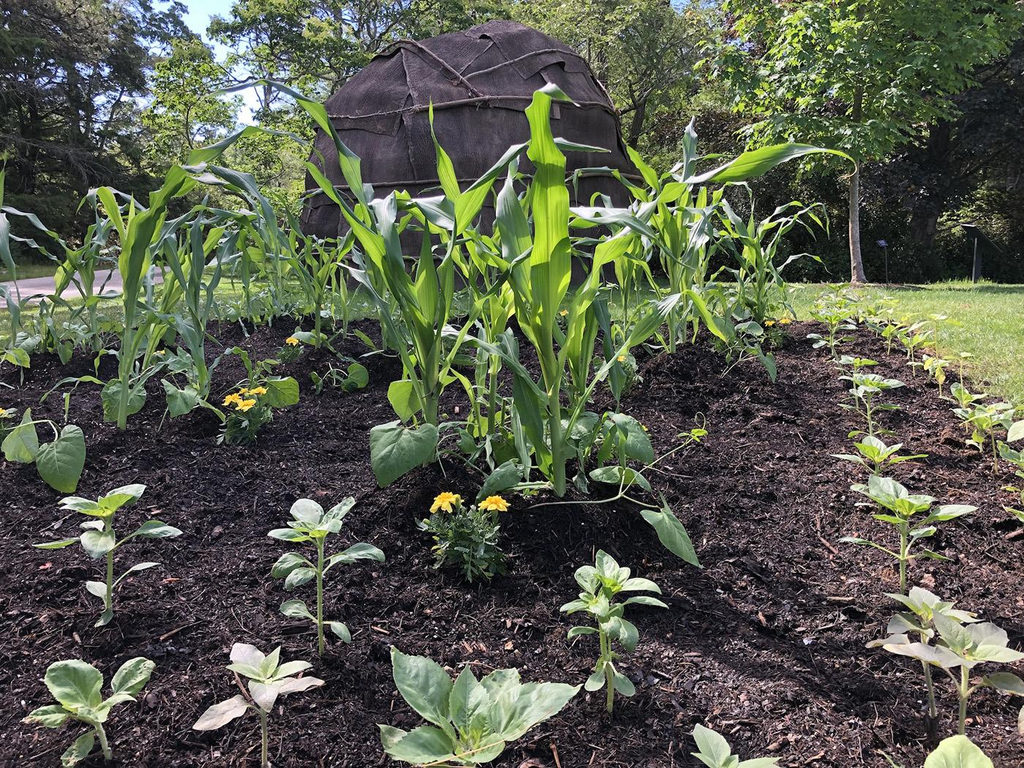
The story highlights the knowledge and contributions of the Wampanoag people, including the importance of growing corn, beans, and squash, known together as the Three Sisters. Additionally, it includes Wampanoag words, cultural context, and information for readers who want to learn more.
As a result, the book offers a perspective often missing from simplified Thanksgiving stories; Indigenous authors and an Indigenous illustrator created it.
What kids can learn: The first Thanksgiving story includes Wampanoag knowledge, traditions, and experiences, not just the English settlers’ perspective.
Try asking: What did the Wampanoag people know about growing food that helped the newcomers? What details in this book were different from stories you’ve heard before?
2. If You Lived During the Plimoth Thanksgiving
By Chris Newell, illustrated by Winona Nelson
Best for: Elementary readers who enjoy asking questions about history
What did people eat in the early 1600s? In addition, children can explore what their homes were like and what historians actually know about the gathering later associated with Thanksgiving.
This nonfiction book uses a question-and-answer format to explore the lives and cultures of the Wampanoag people and English settlers. In addition, it looks beyond the familiar feast to explain the historical circumstances surrounding the event and how Thanksgiving later became a national holiday.
More broadly, written by Indigenous author Chris Newell, the book shows young readers that history can be more complex than a short classroom story or illustration suggests.
What kids can learn: Asking questions and examining different perspectives can help us develop a fuller understanding of historical events.
Try asking: Which questions did the book answer for you? What else would you like to know about the people who lived during this period?
3. 1621: A New Look at Thanksgiving
By Catherine O’Neill Grace and Margaret M. Bruchac, with Plimoth Plantation
Best for: Readers ready for a more detailed look at the first Thanksgiving
Many children grow up hearing a familiar version of the first Thanksgiving, complete with Pilgrims, Native Americans, and a large celebratory meal. However, historical events are often more complicated than the stories we tell.
1621: A New Look at Thanksgiving uses photographs and historical context to examine the harvest gathering involving English colonists and the Wampanoag people. As a result, readers are encouraged to question common assumptions and consider how historical accounts are created.
The book is particularly useful for children who are ready to compare what they’ve previously learned with a more detailed historical account. Furthermore, it gives families and teachers an opportunity to discuss why including different perspectives matters.
What kids can learn: Historical accounts can leave out important details, and looking at evidence from different perspectives can change how we understand the past.
Try asking: What did you believe about the first Thanksgiving before reading this book? Which details made you rethink that story?
4. Colonization and the Wampanoag Story
By Linda Coombs
Best for: Older elementary readers ready for a deeper historical discussion
For children curious about what happened before and after the first Thanksgiving, this nonfiction book explores Indigenous history and European colonization. In doing so, it moves beyond the holiday itself.
Written by Aquinnah Wampanoag author and historian Linda Coombs, the book explores Indigenous history in New England. In addition, it covers European colonization, the disruption of established communities, and the continuing experiences of Indigenous peoples.
This detailed book is best for older readers ready to explore complex history with an adult. It goes beyond one holiday gathering. As a result, children can place Thanksgiving within a much longer historical context.
What kids can learn: The history of the Wampanoag people didn’t begin with the arrival of English settlers, and it didn’t end with the 1621 harvest gathering.
Try asking: Why is it important to learn about what happened before and after a historical event, rather than focusing on just one moment?
5. Giving Thanks: How Thanksgiving Became a National Holiday
By Denise Kiernan, illustrated by Jamey Christoph
Best for: Younger readers curious about the origins of the holiday we celebrate today
The history of Thanksgiving doesn’t end with the harvest gathering of 1621. Instead, the holiday Americans celebrate today developed over time, and this picture book explores one important part of that process.
Giving Thanks tells the story of Sarah Josepha Hale, the writer and editor who campaigned for a national Thanksgiving holiday. Meanwhile, President Abraham Lincoln’s actions during the Civil War also helped shape the holiday’s history.
This book offers a different angle from books focused on the first Thanksgiving. As a result, children can see how traditions develop over generations and how individuals sometimes play an important role in shaping national customs.
What kids can learn: Thanksgiving became a national holiday through a historical process, rather than being celebrated in exactly the same way every year since 1621.
Try asking: What is a tradition your family or community follows today? Do you know how it started, or has it changed over time?
6. Clambake: A Wampanoag Tradition
By Russell M. Peters
Best for: Exploring Wampanoag food traditions and cultural knowledge
Thanksgiving conversations often focus on food. However, food traditions have meanings and histories that extend far beyond one holiday.
Clambake: A Wampanoag Tradition documents a Wampanoag food tradition through a young community member learning from his grandfather. In this way, readers can explore how food preparation connects generations and preserves cultural knowledge.
This book isn’t an account of the first Thanksgiving, and a Wampanoag clambake shouldn’t be presented as a universal Indigenous tradition. Rather, it helps readers understand one specific cultural practice and the knowledge shared within a community.
What kids can learn: Food traditions can preserve family knowledge, cultural identity, and connections between generations.
Try asking: Is there a food that has a special meaning in your family? Who taught you how to make it, and what stories do you associate with it?
7. Balloons Over Broadway: The True Story of the Puppeteer of Macy’s Parade
By Melissa Sweet
Best for: Children curious about the history behind a familiar Thanksgiving tradition
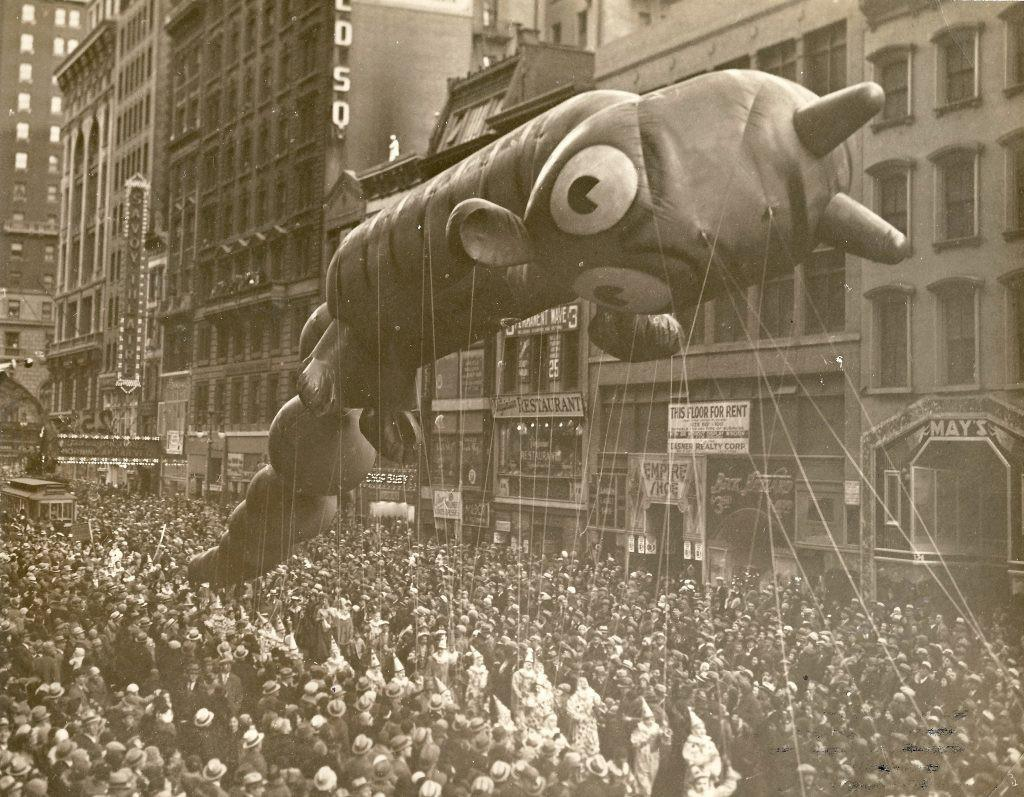
For many families, watching the Macy’s Thanksgiving Day Parade is part of their holiday routine. So, how did its enormous balloons become so recognizable?
This illustrated picture-book biography tells the story of Tony Sarg, the puppeteer who helped inspire the parade’s giant balloons. Through colorful artwork and an engaging account of his work, Melissa Sweet shows how an inventor’s ideas became a beloved public tradition.
Unlike the books about the 1621 gathering, this one focuses on a more recent tradition associated with the holiday. In turn, it gives children a chance to explore how traditions develop through creativity, experimentation, and the work of many people.
What kids can learn: Some familiar holiday traditions have their own histories, and they often begin with someone trying a new idea.
Try asking: What part of the Thanksgiving season has become a tradition for your family? How do you think that tradition began?
8. Fry Bread: A Native American Family Story
By Kevin Noble Maillard, illustrated by Juana Martinez-Neal
Best for: Younger readers exploring food, family, and cultural identity
Food can carry memories, stories, and cultural meaning. For example, Fry Bread: A Native American Family Story explores these connections through the experiences of a contemporary Native American family.
Written by Kevin Noble Maillard, a citizen of the Seminole Nation of Oklahoma, the book explores fry bread as food, family, time, and community. Moreover, its lyrical language and expressive illustrations invite readers to consider the diversity of Native American experiences and how traditions continue to develop.
This isn’t a book specifically about Thanksgiving or the Wampanoag people. Instead, it broadens a holiday reading list by showing how food and family traditions can connect people across generations. For that reason, it can be a useful companion to a discussion about the different meanings food holds for different communities.
What kids can learn: Food can represent far more than what people eat. It can also carry memories, identity, history, and a sense of belonging.
Try asking: Is there a food that reminds you of a person, a place, or a special occasion? What makes it meaningful to you?
What Can Kids Learn From Thanksgiving History Books?
Thanksgiving history books do more than introduce dates and historical figures. For example, they connect the past to familiar traditions. In addition, they show why different perspectives matter and how the holiday has changed over time.
History is more complicated than a familiar story
Children often learn simplified versions of historical events. However, books with different perspectives show that the past is more complex than a short classroom story suggests.
When discussing the first Thanksgiving, include the Wampanoag perspective and recognize the long history of Indigenous peoples in their homelands. At the same time, explain that relationships between Indigenous communities and English colonists changed over time.
The Smithsonian National Museum of the American Indian’s Thanksgiving resources provide additional historical context, primary-source activities, and classroom materials for families and educators.
Traditions can change over time
The Thanksgiving holiday celebrated today isn’t identical to the 1621 harvest gathering. Over time, it developed into a national tradition. Books about Sarah Josepha Hale’s campaign and the Macy’s Thanksgiving Day Parade show children how familiar customs evolve. Similarly, family traditions change as children grow, relatives move, and new experiences become part of celebrations.
Likewise, families may develop traditions of their own as children grow, relatives move, and new experiences become part of the celebration.
Different communities have different traditions
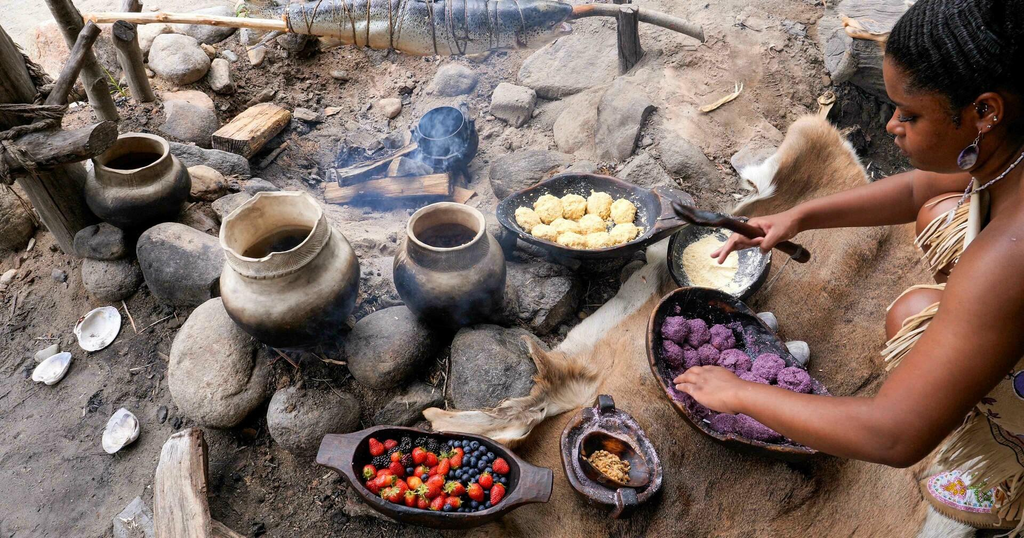
Beyond the national holiday’s history, remember that Indigenous peoples are not one single group. They do not all share the same history or customs. For example, books about Wampanoag history, Cherokee traditions, and contemporary Native American family life each offer a distinct perspective. By exploring these differences, children can approach cultural traditions with greater curiosity and respect.
These stories can help children approach cultural differences with curiosity and respect. More importantly, they remind readers that Indigenous peoples and communities continue to live, create, and maintain traditions today.
Gratitude can be part of everyday life
Thanksgiving is a natural opportunity to talk about gratitude, but children can learn to appreciate people, experiences, and everyday moments throughout the year.
Books about food, family, and cultural traditions can start conversations about gratitude. Furthermore, they can show how people express it in different ways.
How to Make Thanksgiving Reading More Meaningful
You don’t need an elaborate lesson plan to make a holiday book memorable. Instead, a few simple activities can help children connect what they read to their own questions and experiences.
- Ask questions before reading. Find out what children already know about Thanksgiving and what they would like to learn.
- Compare different perspectives. If you read more than one history book, discuss how each author approaches the topic and what new information each book provides.
- Explore a family tradition. Talk about a recipe, a seasonal activity, or a tradition that has been passed down through generations.
- Use age-appropriate discussion. Younger children may benefit from simple explanations and picture books, while older elementary students can explore historical evidence and more complex questions.
- Let children follow their curiosity. Some will enjoy historical details, while others will connect more strongly with food, family stories, or creative traditions.
For more ideas on choosing informational books, explore our guide to nonfiction reading for kids. Additionally, you can browse Epic’s digital reading library for children’s books about history, culture, food, and other interests. However, be sure to check individual titles for availability.

Final Thoughts
Thanksgiving can be a wonderful opportunity to share books, ask questions, and explore the stories behind familiar traditions. The most meaningful holiday reading doesn’t just tell children what happened in the past. It helps them consider whose perspectives are included, how traditions develop, and how different communities understand history, food, and gratitude.
Together, these eight books offer several ways to explore the subject. They cover the Wampanoag perspective on the 1621 harvest gathering, the development of Thanksgiving as a national holiday, and traditions that continue to connect families and communities.
You don’t have to cover every historical detail in one sitting. Instead, start with a book that suits your child’s age and interests, make room for questions, and let the conversation grow from there.
Frequently Asked Questions (FAQ)
What are the best Thanksgiving history books for kids?
Some useful choices include Keepunumuk: Weeâchumun’s Thanksgiving Story, If You Lived During the Plimoth Thanksgiving, 1621: A New Look at Thanksgiving, and Giving Thanks: How Thanksgiving Became a National Holiday. Each explores a different part of the holiday’s history or the perspectives and traditions connected to it.
How can I teach kids the real history of Thanksgiving?
Start with age-appropriate books that include Wampanoag perspectives rather than relying only on the familiar story of the Pilgrims and a shared meal. Next, explain that the 1621 harvest gathering took place within a much longer history of Indigenous communities, European encounters, colonization, and changing relationships. For further context, the Smithsonian’s Native Knowledge 360° Thanksgiving resources offer a useful place to learn more.
Are there Thanksgiving books that explore Indigenous traditions?
Yes. Keepunumuk: Weeâchumun’s Thanksgiving Story explores Wampanoag perspectives and traditions connected to the harvest gathering. Meanwhile, Clambake: A Wampanoag Tradition explores a specific Wampanoag food tradition. Fry Bread: A Native American Family Story focuses on food, family, and cultural identity in a contemporary Native American context. Because these books cover different subjects and communities, they shouldn’t be treated as interchangeable accounts of the same history.
What age should children start reading Thanksgiving history books?
Picture books can introduce the subject to preschoolers and younger elementary students. By contrast, more detailed nonfiction books suit children ready to explore historical context and multiple perspectives. Ultimately, consider your child’s reading level, curiosity, and readiness rather than relying on age alone.
Can Thanksgiving books help children learn about gratitude?
Absolutely. Some books explore gratitude directly, while others show how food, family, community, and seasonal traditions connect people. As a result, reading together can help children discuss what gratitude means to them and discover how different families and cultures express it.