
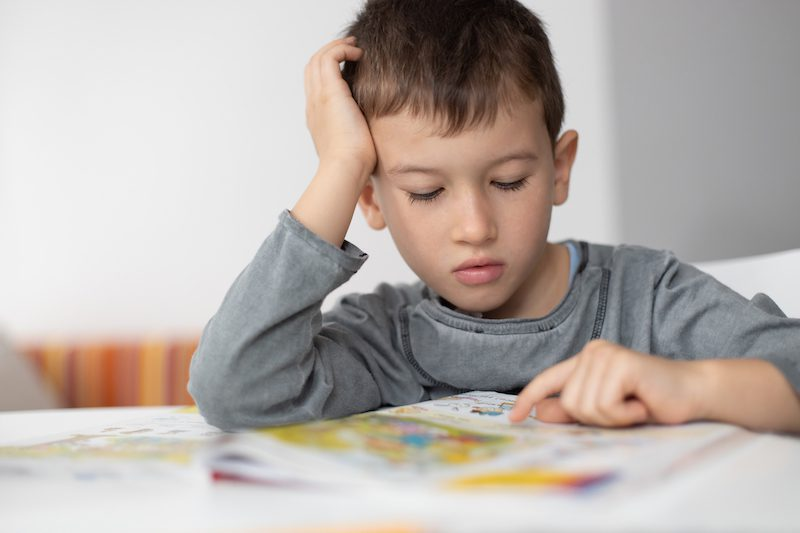
Your child sits down with a book, reads every word aloud perfectly, and then looks up at you with a blank stare when you ask what it was about. Sound familiar? If your child can read but doesn’t understand what they’re reading, you’re not alone — and more importantly, there’s a very clear reason this happens and a straightforward path to fixing it.
This issue is more common than most parents realize, and it has a name: decoding without comprehension. In this article, we’ll explain exactly what’s happening in your child’s brain when they read without understanding, why it occurs, and what you can do about it at home starting today.
What Is Decoding? Why Your Child Can Read But Doesn’t Understand
When most people say a child “can read,” what they often mean is that the child can decode — that is, look at printed letters and convert them into spoken words. Decoding is a critical skill, and it takes a lot of effort for young readers to develop. However, decoding is only one half of reading.
True reading requires two things working together:
- Decoding — the ability to recognize and sound out words
- Language comprehension — the ability to understand the meaning of those words in context
When a child can decode fluently but struggles to understand what they’ve read, it means these two skills are developing at different rates. The good news is that comprehension is a teachable skill — it just needs deliberate, consistent practice.
Why Your Child Can Read But Doesn’t Understand
There are several reasons a child can read words fluently but still struggle with comprehension. Understanding which one applies to your child is the first step toward fixing it.
1. All Mental Energy Goes Toward Decoding
For beginning readers, sounding out words takes enormous concentration. When a child’s brain is working overtime just to decode each word, there’s little mental energy left over to process meaning. As a result, they finish a sentence or paragraph without retaining what it said. This is sometimes called the “cognitive load” problem — and it typically resolves naturally as decoding becomes more automatic with practice.
2. Limited Background Knowledge
Comprehension depends heavily on what a reader already knows. For example, if a child reads a passage about the ocean but has never learned anything about marine life, tides, or ecosystems, the words will feel disconnected and meaningless even if they can decode every one of them. Background knowledge acts as a scaffold for understanding — without it, comprehension suffers even when decoding is strong.
3. Weak Vocabulary
A child can decode a word perfectly and still have no idea what it means. If a child encounters too many unfamiliar words in a text, comprehension breaks down quickly. This is why vocabulary development is such an important — and often overlooked — part of literacy instruction.
4. Lack of Active Reading Strategies
Strong readers don’t just read passively — they predict, question, visualize, and connect what they’re reading to things they already know. Many children who struggle with comprehension have simply never been taught these active reading strategies. They read the words, but they don’t engage with the text.
5. The Text Is Too Difficult
Sometimes the issue is simply that the book is above the child’s reading level. A child may be able to decode words at a certain level without being able to comprehend text at that same level. Matching a child to appropriately leveled books makes a significant difference in comprehension outcomes.
Signs Your Child Has Reading Comprehension Issues
If you’re wondering whether your child has a comprehension problem, look for these signs:
- They read fluently aloud but cannot retell what the passage was about
- They struggle to answer simple questions about what they just read
- They can identify individual words but miss the overall meaning of a paragraph
- They read without expression or pausing — as if reciting rather than understanding
- They avoid reading independently and show little curiosity about books
- They perform well on word recognition tests but poorly on comprehension assessments at school
If several of these sound familiar, your child likely falls into the category of children who can read but don’t understand — and the strategies below will help.

The Simple View of Reading
Researchers use a framework called the Simple View of Reading to explain how reading comprehension works. It comes down to this formula:
Reading Comprehension = Decoding × Language Comprehension

This means that if either skill is close to zero, overall reading comprehension will be low — even if the other skill is strong. A child who decodes perfectly but has weak language comprehension will still struggle to understand what they read. Likewise, a child with strong language skills but weak decoding will also struggle.
Understanding this framework helps explain why phonics alone is never enough. Both skills need to be developed together for a child to become a truly capable reader.
👉 Related reading: Phonics and Early Reading at Home
How to Help a Child Who Can Read But Doesn’t Understand
The good news is that reading comprehension can be improved significantly with the right habits and strategies at home. Here is what works:
Read Aloud Together Every Day
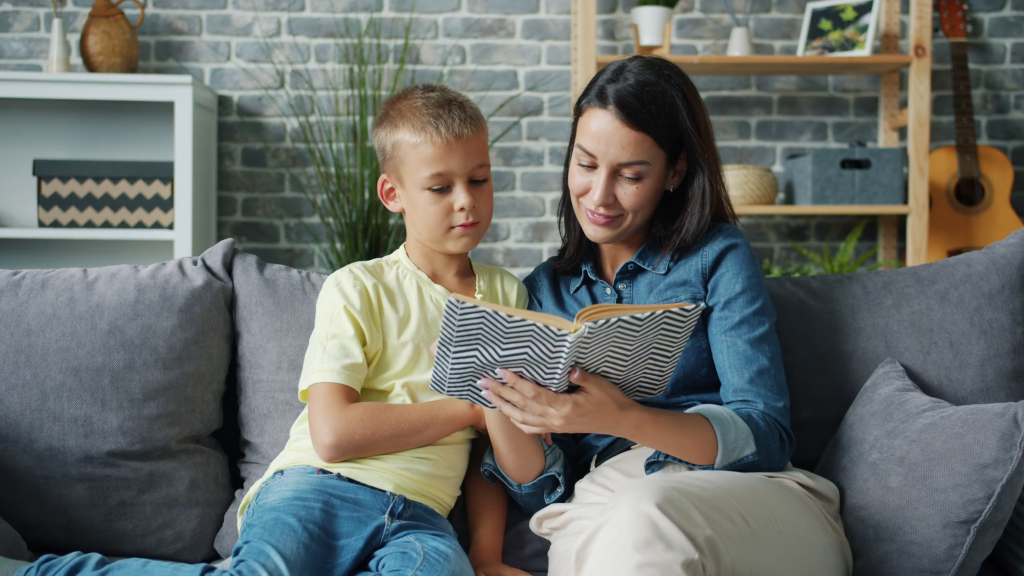
Reading aloud to your child — even after they can read independently — is one of the most powerful things you can do for comprehension. When you read aloud, your child can focus entirely on meaning without the cognitive load of decoding. Furthermore, hearing fluent, expressive reading models what engaged reading sounds like. Aim for at least 15–20 minutes of read-aloud time daily.
Ask Questions Before, During, and After Reading
Turn reading into a conversation rather than a performance. Before reading, ask: “What do you think this book will be about?” During reading, pause and ask: “What do you think will happen next?” After reading, ask: “What was the most interesting part? Why did the character do that?” These simple questions activate comprehension and teach children to think while they read.

Build Background Knowledge
Expose your child to a wide range of topics through books, documentaries, museum visits, conversations, and everyday experiences. The more a child knows about the world, the more they can connect new reading material to existing knowledge — and the better their comprehension becomes. Non-fiction books and educational shows are particularly valuable for building this kind of broad background knowledge.
Teach Visualization
Ask your child to close their eyes and picture what’s happening in the story as you read. Visualization is a powerful comprehension strategy because it forces the brain to process meaning actively rather than passively. You can make it a game: “Draw what you think the scene looks like” or “Describe the picture in your head.”
Expand Vocabulary Intentionally
When you encounter an unfamiliar word during reading, don’t skip it — use it as a teaching moment. Ask your child to guess the meaning from context, then look it up together and use it in a sentence. Over time, this habit builds the kind of rich vocabulary that supports deep comprehension across all types of texts.
Match Books to the Right Level
Make sure your child is reading books that are at or slightly below their independent reading level for solo reading time. Books that are too hard create frustration and poor comprehension. Save more challenging books for read-aloud sessions where you can support understanding together.
👉 Related reading: Understanding Reading Levels for Kids
Tools That Help Children Read and Understand Better
In addition to the strategies above, several free tools are particularly effective for building comprehension skills:
- Storyline Online — Professional actors read picture books aloud with expression, modeling fluent and meaningful reading for children.
- Epic! — A vast digital library where children can explore books across topics that interest them, building background knowledge naturally.
- Reading Rockets — Research-based comprehension strategies and resources for parents who want to understand how to support their child more effectively.
- Khan Academy Kids — Covers vocabulary and comprehension alongside phonics in a structured, child-friendly format.
👉 Related reading: Top 10 Free Reading Tools for Kids
When to Seek Additional Help
For many children, comprehension improves significantly with consistent practice at home. However, if your child has been struggling for several months despite regular support, it may be worth seeking additional help. Consider speaking with their teacher or a reading specialist if:
- Comprehension hasn’t improved after several months of targeted practice
- Your child shows signs of frustration, anxiety, or avoidance around reading
- They are significantly behind their grade-level peers in reading assessments
- They struggle with listening comprehension as well as reading comprehension
A reading specialist can assess whether there is an underlying language processing issue and recommend a targeted intervention plan. Early support always produces better outcomes than waiting.
Final Thoughts
When a child can read but doesn’t understand what they’ve read, it’s not a sign that something is permanently wrong — it’s a signal that one part of their reading development needs more attention. Comprehension is a skill, and like all skills it responds to practice, patience, and the right strategies.
The most important thing you can do as a parent is stay involved. Read together, talk about books, ask questions, and build a home environment where reading is a meaningful, enjoyable part of daily life. Over time, those habits make a far bigger difference than any program or curriculum ever could.
FAQ: Child Can Read But Doesn’t Understand
Why can my child read words but not understand the meaning?
This is called decoding without comprehension. It happens when a child’s brain is using all its energy to sound out words, leaving little left over to process meaning. It can also be caused by limited vocabulary, weak background knowledge, or reading books that are too difficult. All of these are fixable with the right support.
Is it normal for a child to read fluently but have poor comprehension?
Yes, it is more common than most parents expect. Fluency and comprehension are separate skills that develop at different rates. Many children master decoding before their comprehension catches up — particularly in the early elementary years. However, if the gap persists beyond second or third grade, targeted support is recommended.
How can I improve my child’s reading comprehension at home?
Read aloud together daily, ask questions before and after reading, teach your child to visualize what they’re reading, expand vocabulary through conversation, and make sure they’re reading books at the right level. Consistency matters more than any single strategy — small daily habits produce the biggest results over time.
Could poor reading comprehension be a sign of dyslexia?
Dyslexia primarily affects decoding — not comprehension. In fact, many children with dyslexia have strong comprehension skills when text is read aloud to them. However, if your child struggles with both decoding and comprehension, or shows signs of difficulty processing language in general, it’s worth speaking with a reading specialist or educational psychologist for a proper assessment.
What age should children be able to understand what they read?
Basic comprehension — like retelling a simple story — typically develops alongside early reading skills between ages 5 and 7. Deeper comprehension skills like inference, identifying themes, and reading critically develop through ages 8 to 12 and beyond. If your child is struggling significantly with basic comprehension by the end of first grade, additional support is worth pursuing.